MANTA
MANTA
MANTA
Tessellating Floor Seats Made of P.E.T. Felt
Tessellating Floor Seats Made of P.E.T. Felt
Tessellating Floor Seats Made of P.E.T. Felt
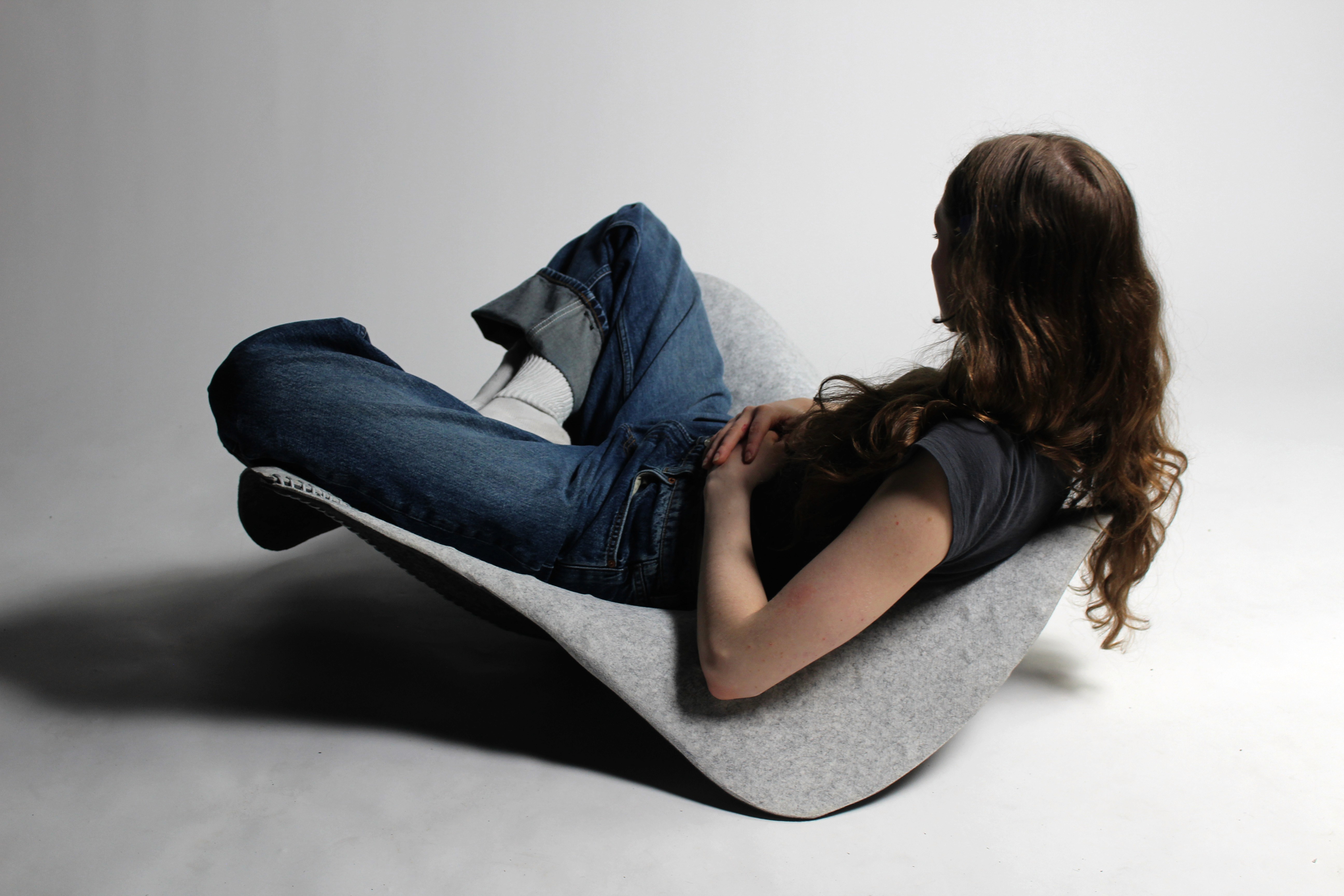
Manta is a proposition that furniture should be willing to move, reconfigure, and adapt to the needs of the space and the people in it.
Through the use of simple materials and modular systems, Manta engages users to sit more freely, whether they are using it to create communal lounge spaces when seats tile together, create individual seating to move, relax, and play in, or stacked and put away to allow the space to hold a different function.
Manta is a proposition that furniture should be willing to move, reconfigure, and adapt to the needs of the space and the people in it.
Through the use of simple materials and modular systems, Manta engages users to sit more freely, whether they are using it to create communal lounge spaces when seats tile together, create individual seating to move, relax, and play in, or stacked and put away to allow the space to hold a different function.
Manta is a proposition that furniture should be willing to move, reconfigure, and adapt to the needs of the space and the people in it.
Through the use of simple materials and modular systems, Manta engages users to sit more freely, whether they are using it to create communal lounge spaces when seats tile together, create individual seating to move, relax, and play in, or stacked and put away to allow the space to hold a different function.
THE FLOOR CAN BE FURNITURE
THE FLOOR CAN BE FURNITURE
THE FLOOR CAN BE FURNITURE
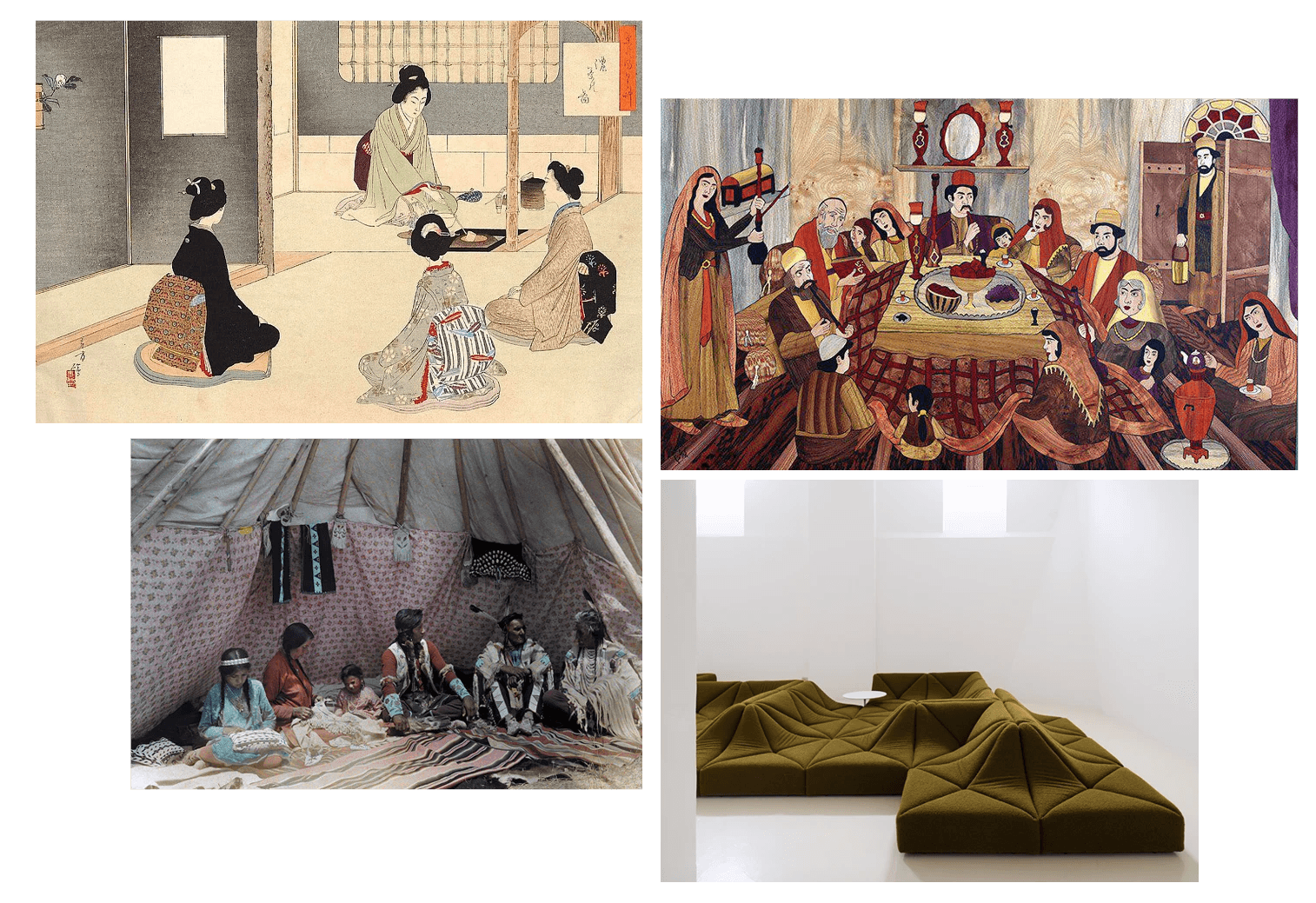
In much of the western world, seats are typically 18” off the ground. This phenomenon occurs in contrast to a global history of sitting close to the ground. Modernist and post modernist designers idealized this type of communal floor seating through the “conversation pit,” however these designs often impose and dictate themselves on the space, creating little room for reinterpretation.
The goal of this project is to create this type of communal lounge furniture, without dictating spatial function.
In much of the western world, seats are typically 18” off the ground. This phenomenon occurs in contrast to a global history of sitting close to the ground. Modernist and post modernist designers idealized this type of communal floor seating through the “conversation pit,” however these designs often impose and dictate themselves on the space, creating little room for reinterpretation.
The goal of this project is to create this type of communal lounge furniture, without dictating spatial function.
In much of the western world, seats are typically 18” off the ground. This phenomenon occurs in contrast to a global history of sitting close to the ground. Modernist and post modernist designers idealized this type of communal floor seating through the “conversation pit,” however these designs often impose and dictate themselves on the space, creating little room for reinterpretation.
The goal of this project is to create this type of communal lounge furniture, without dictating spatial function.
LANDSCAPE OF SEATING
LANDSCAPE OF SEATING
LANDSCAPE OF SEATING
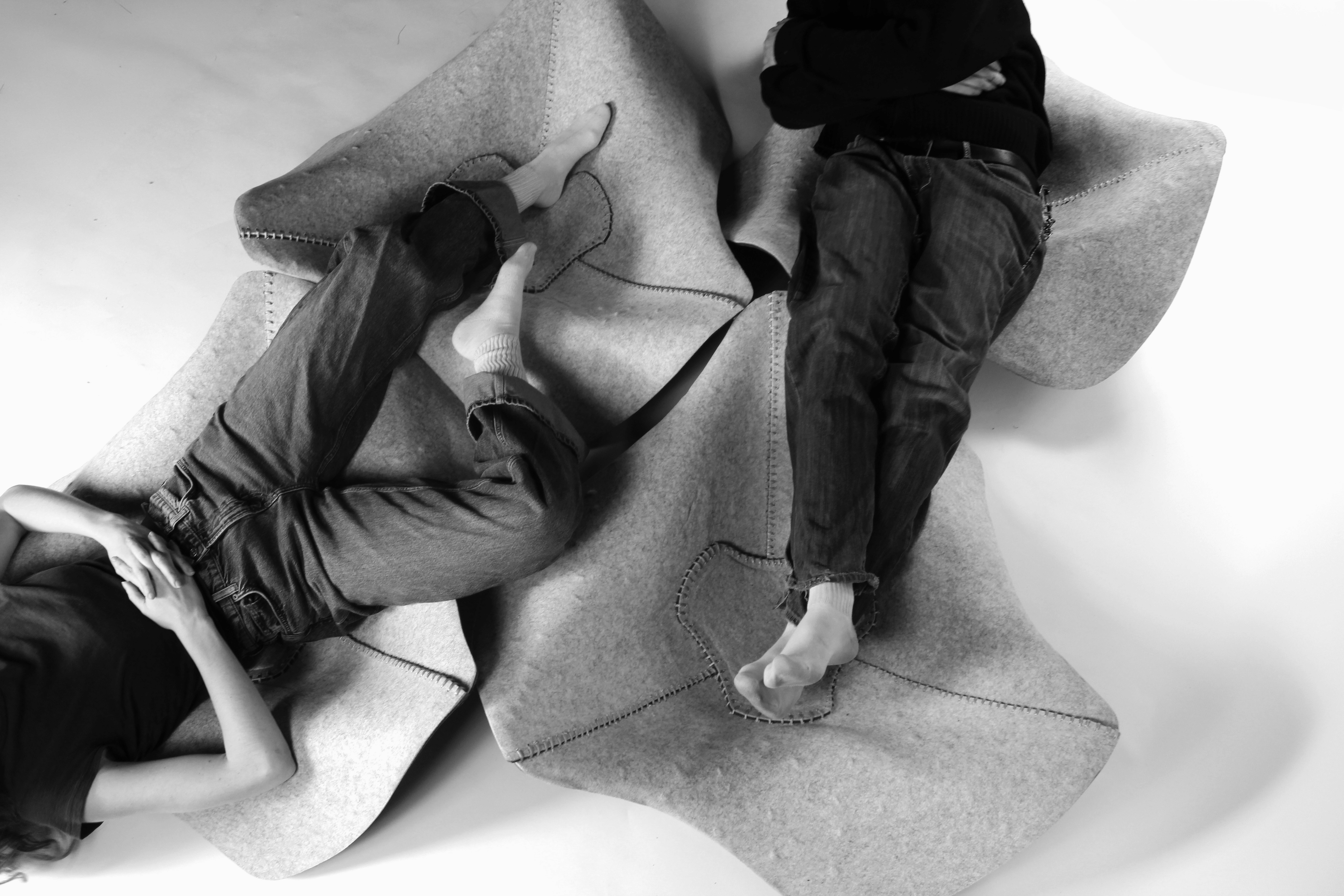
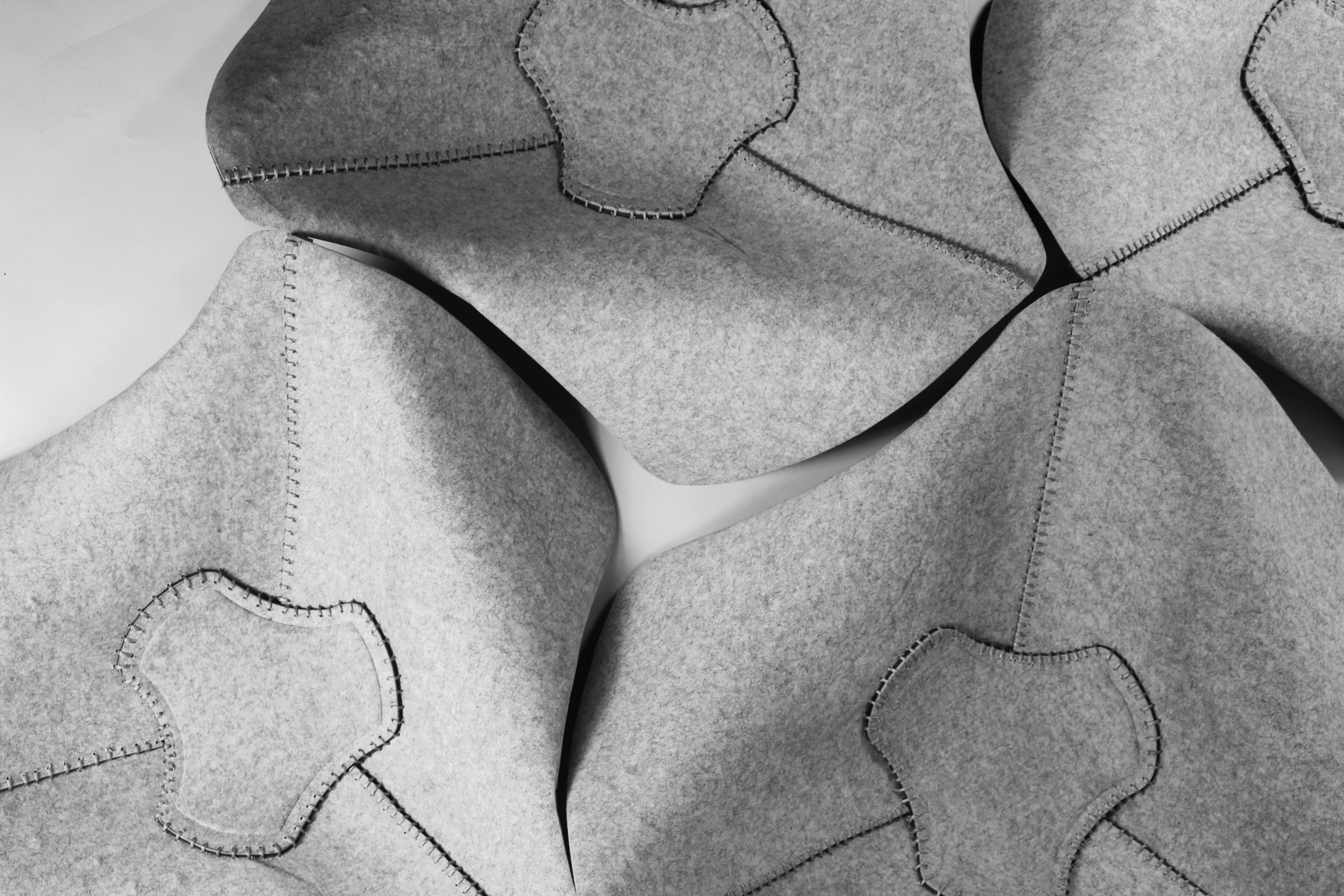
When tiled together, seats can create a communal landscape of seating, for people to lounge together.
When tiled together, seats can create a communal landscape of seating, for people to lounge together.
When tiled together, seats can create a communal landscape of seating, for people to lounge together.
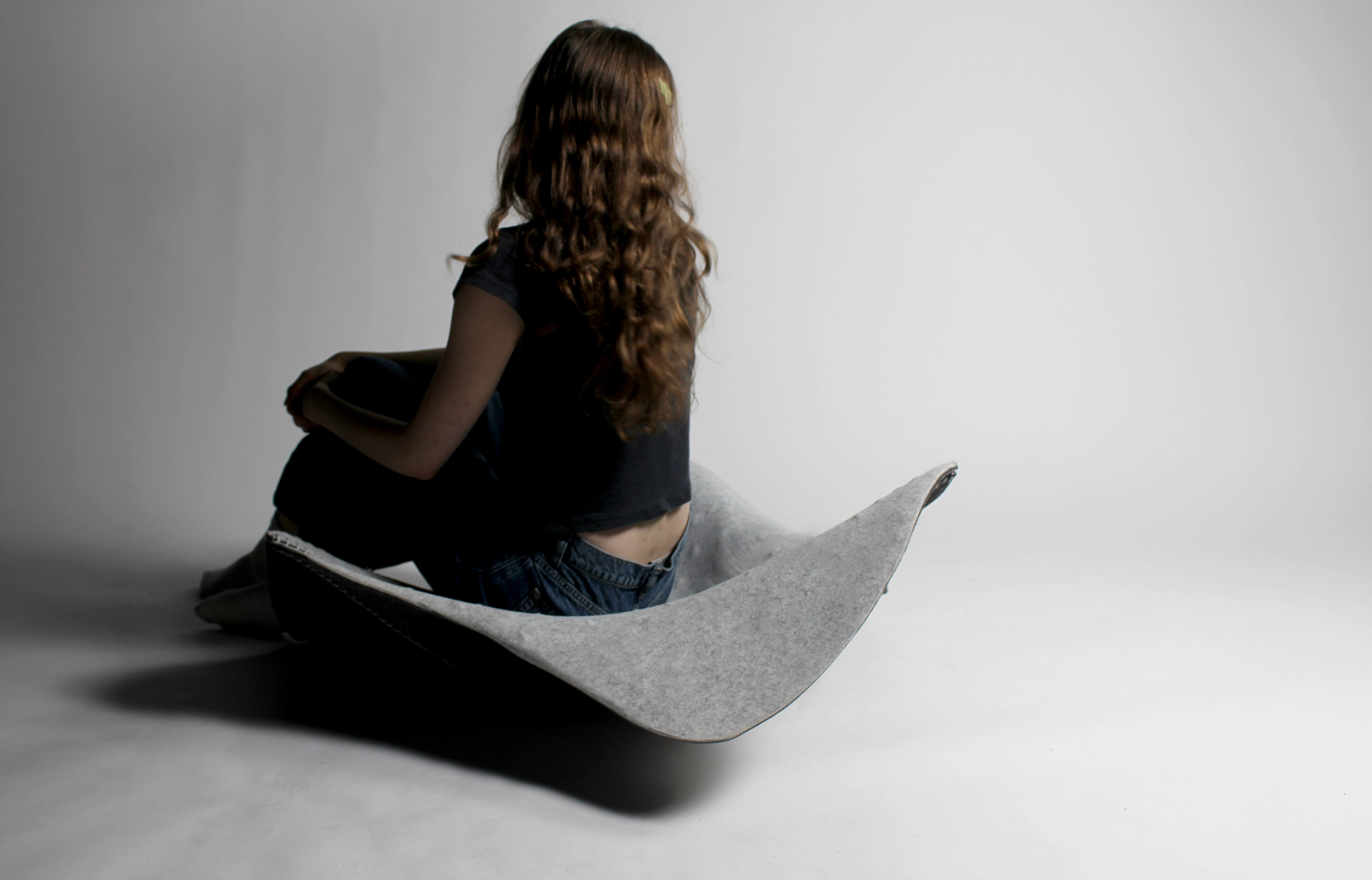
OPEN ended seating
OPEN ended seating
OPEN ended seating
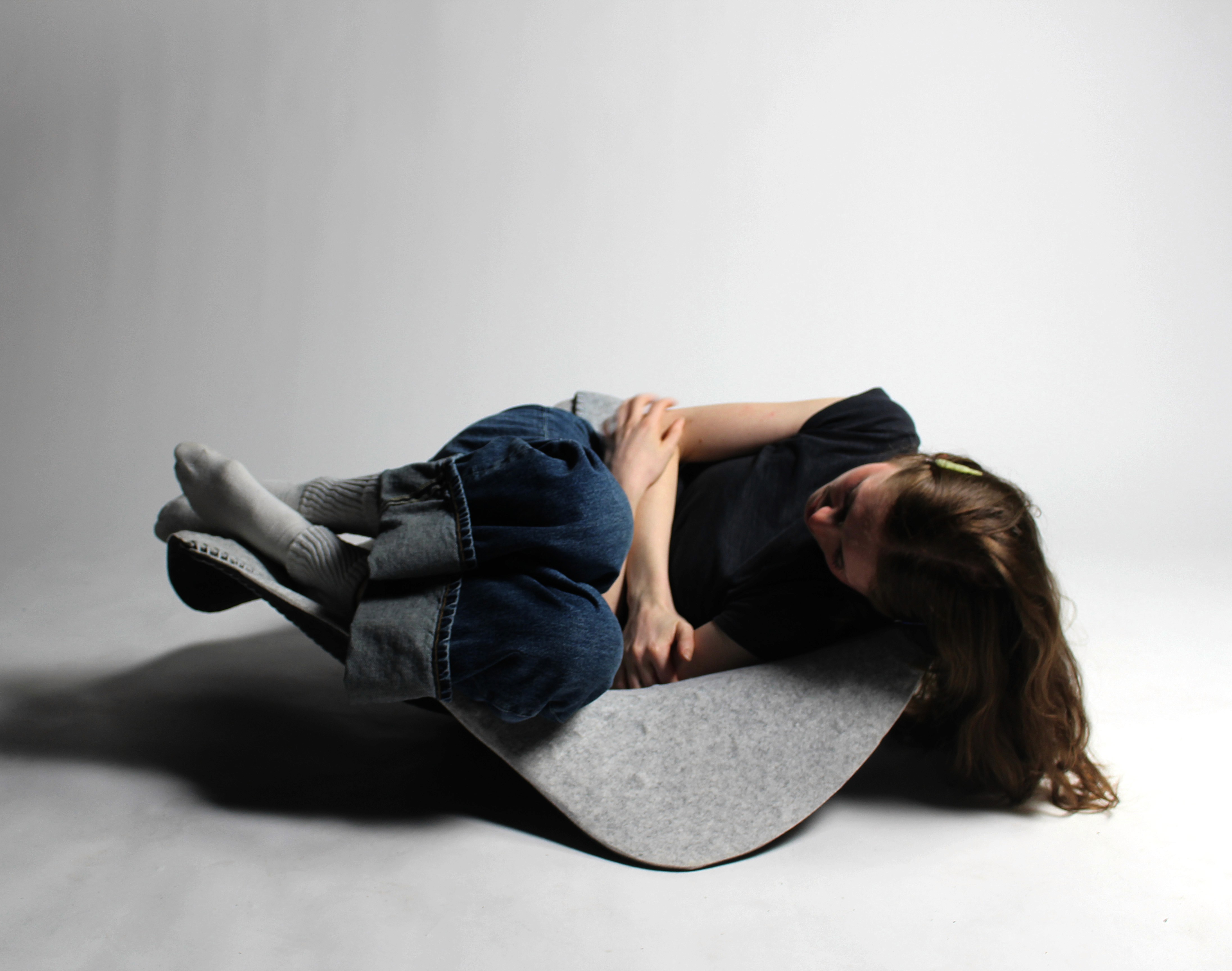
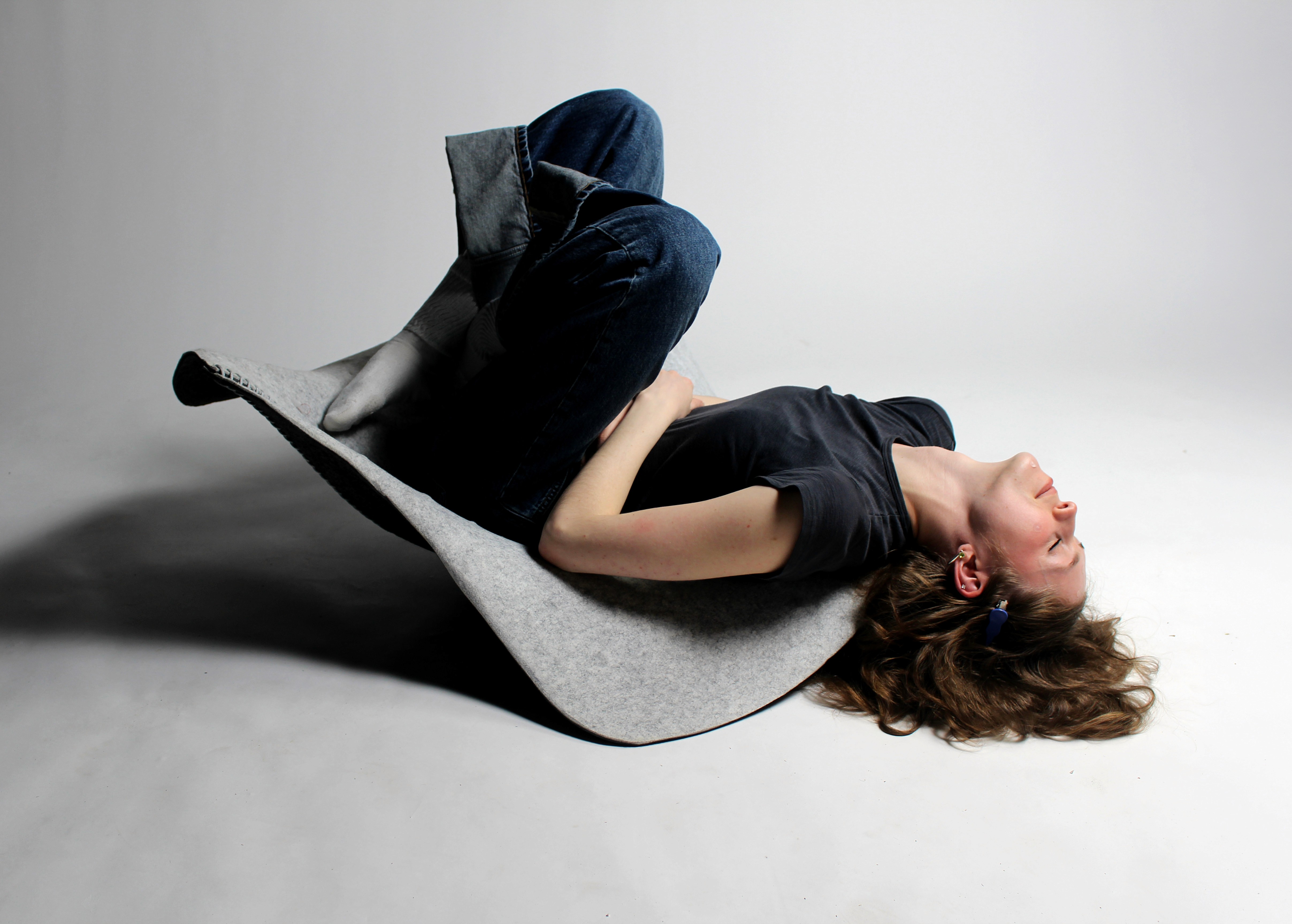
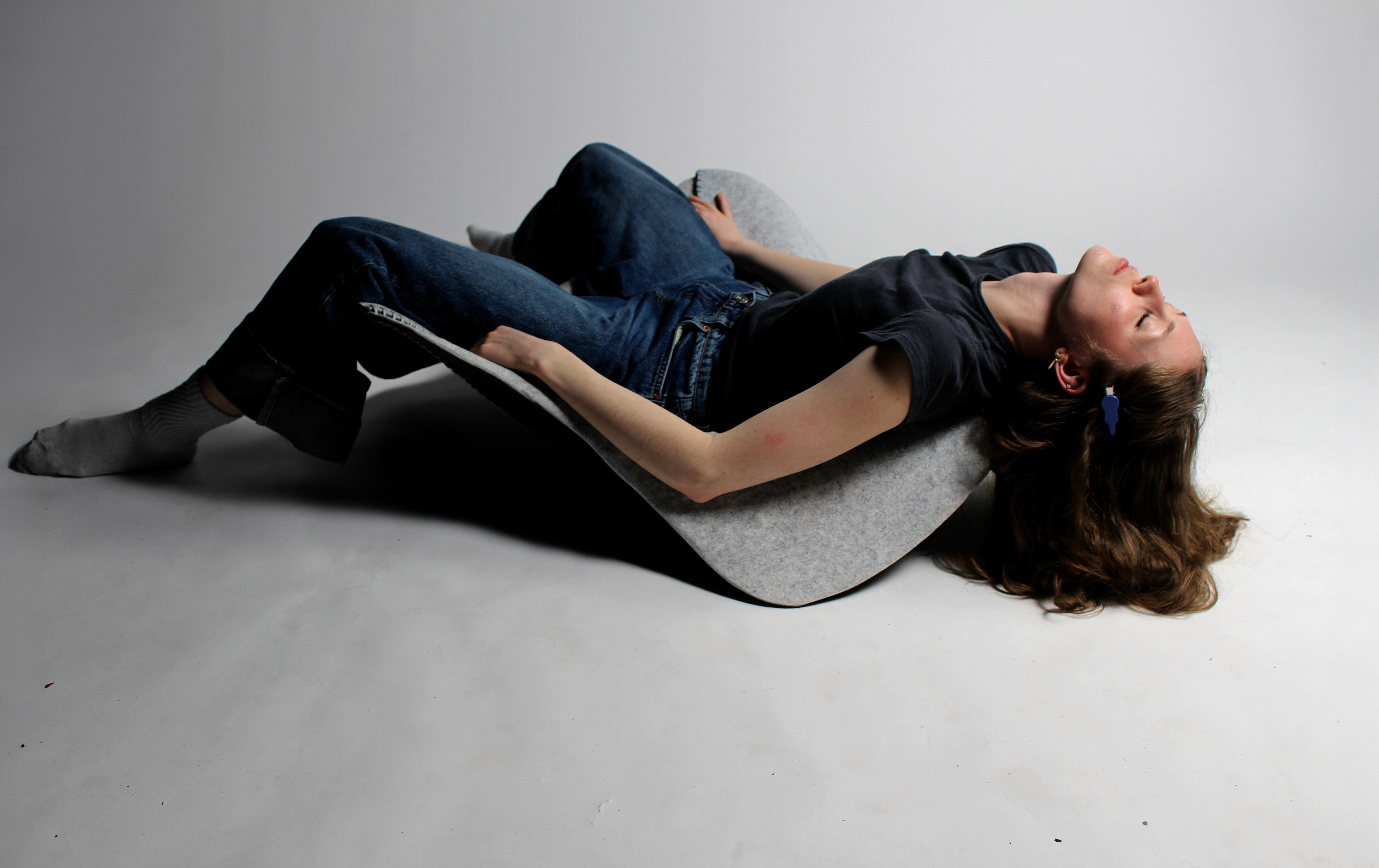
Through its form, Manta engages users to sit more freely. The seat encourages various postures and movements to create a less rigid sitting experience.
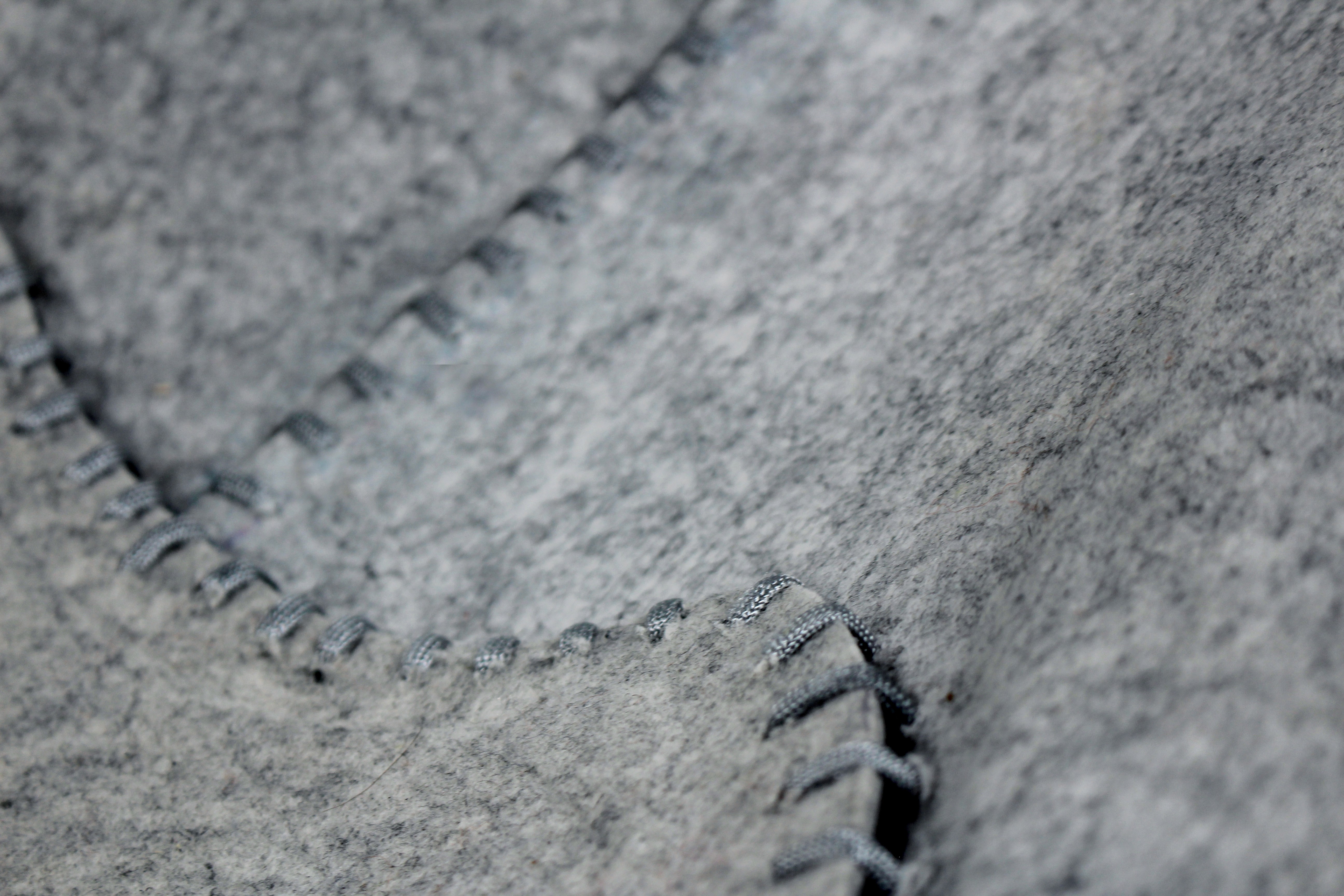
PARACORD STITCHING
PARACORD STITCHING
PARACORD STITCHING
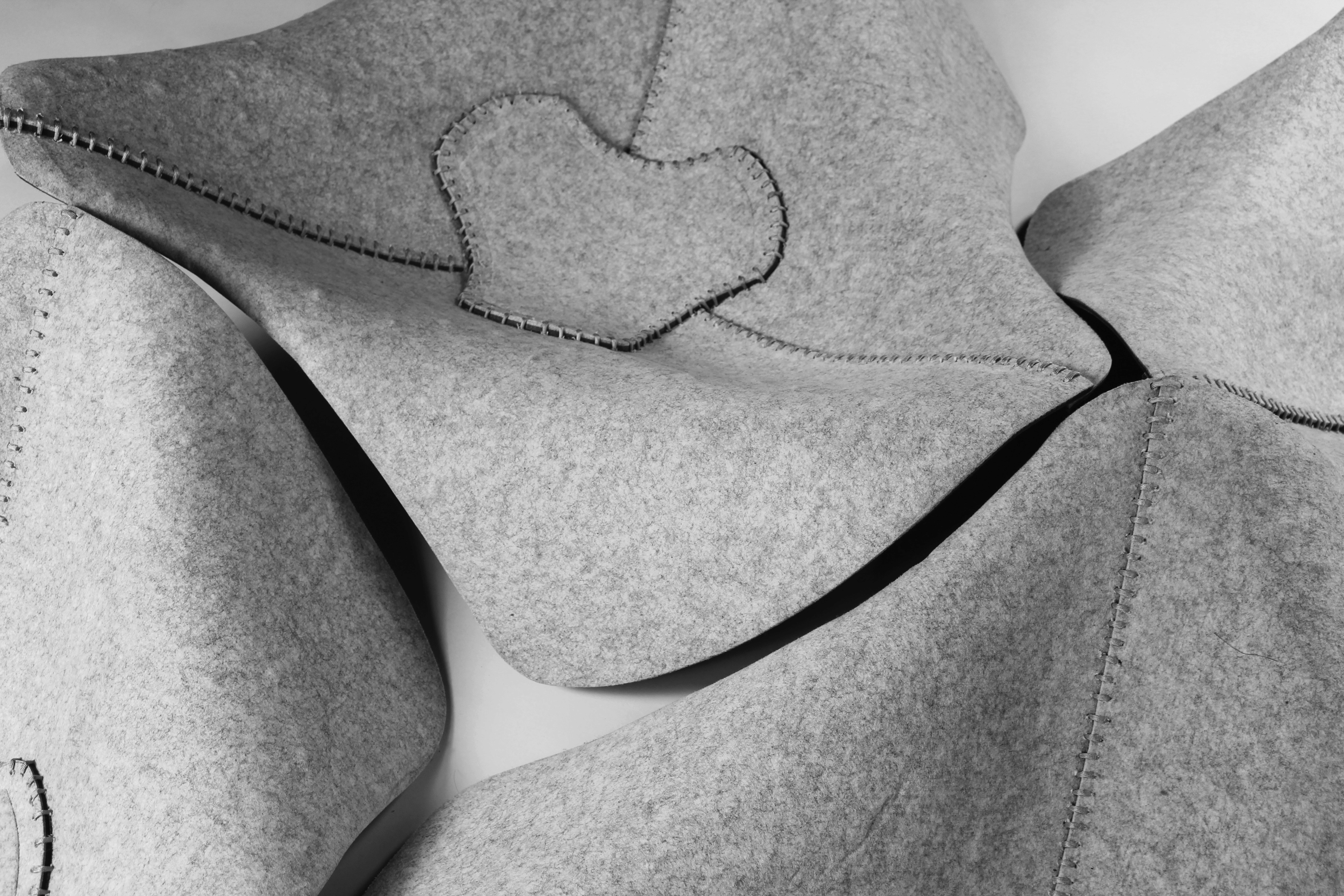
To celebrate the construction of the seat, I explored paracord stitching as a way to securely fix the panels together. This gives the seat additional strength without the use of resins, glues, or a frame.
To celebrate the construction of the seat, I explored paracord stitching as a way to securely fix the panels together. This gives the seat additional strength without the use of resins, glues, or a frame.
To celebrate the construction of the seat, I explored paracord stitching as a way to securely fix the panels together. This gives the seat additional strength without the use of resins, glues, or a frame.
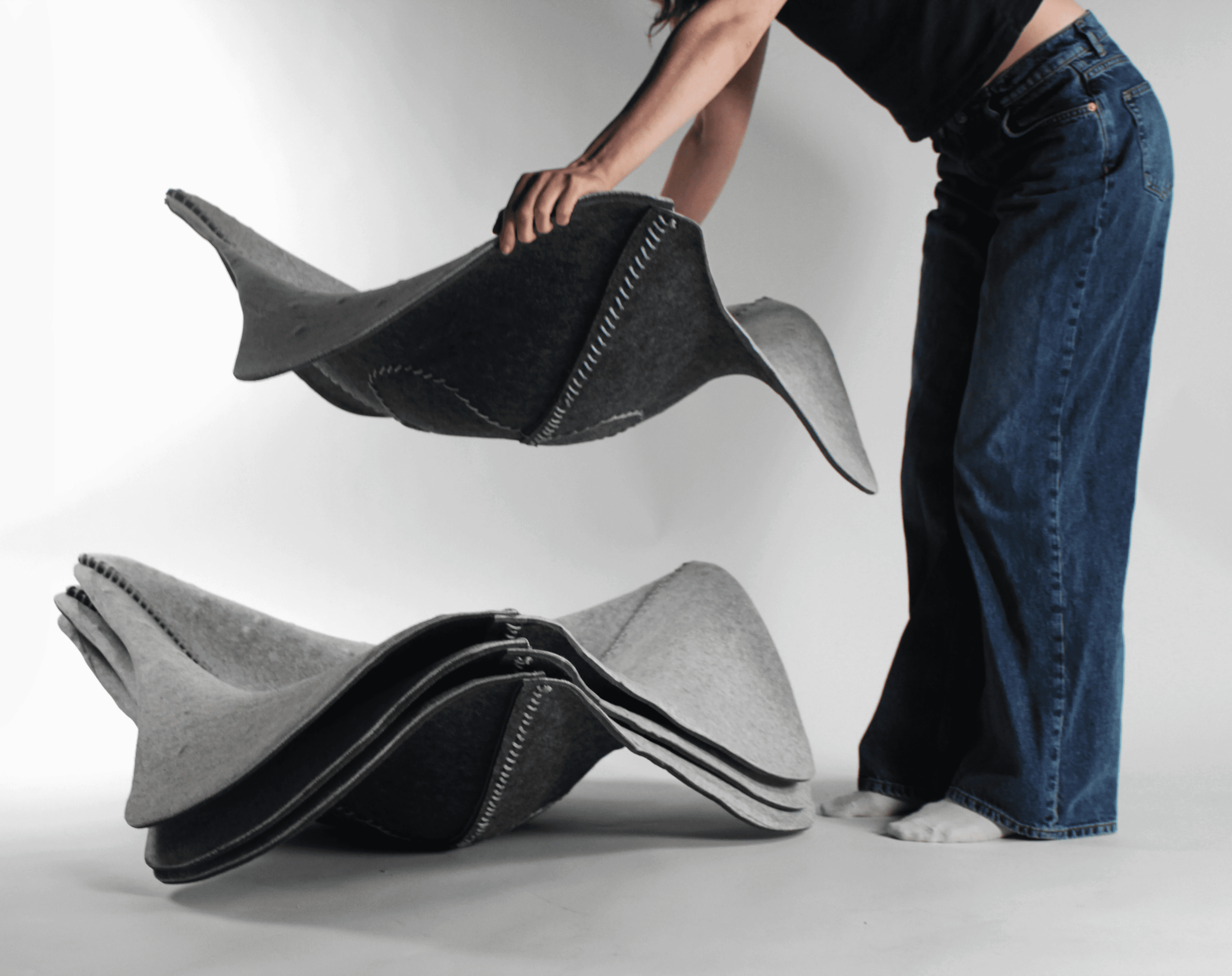
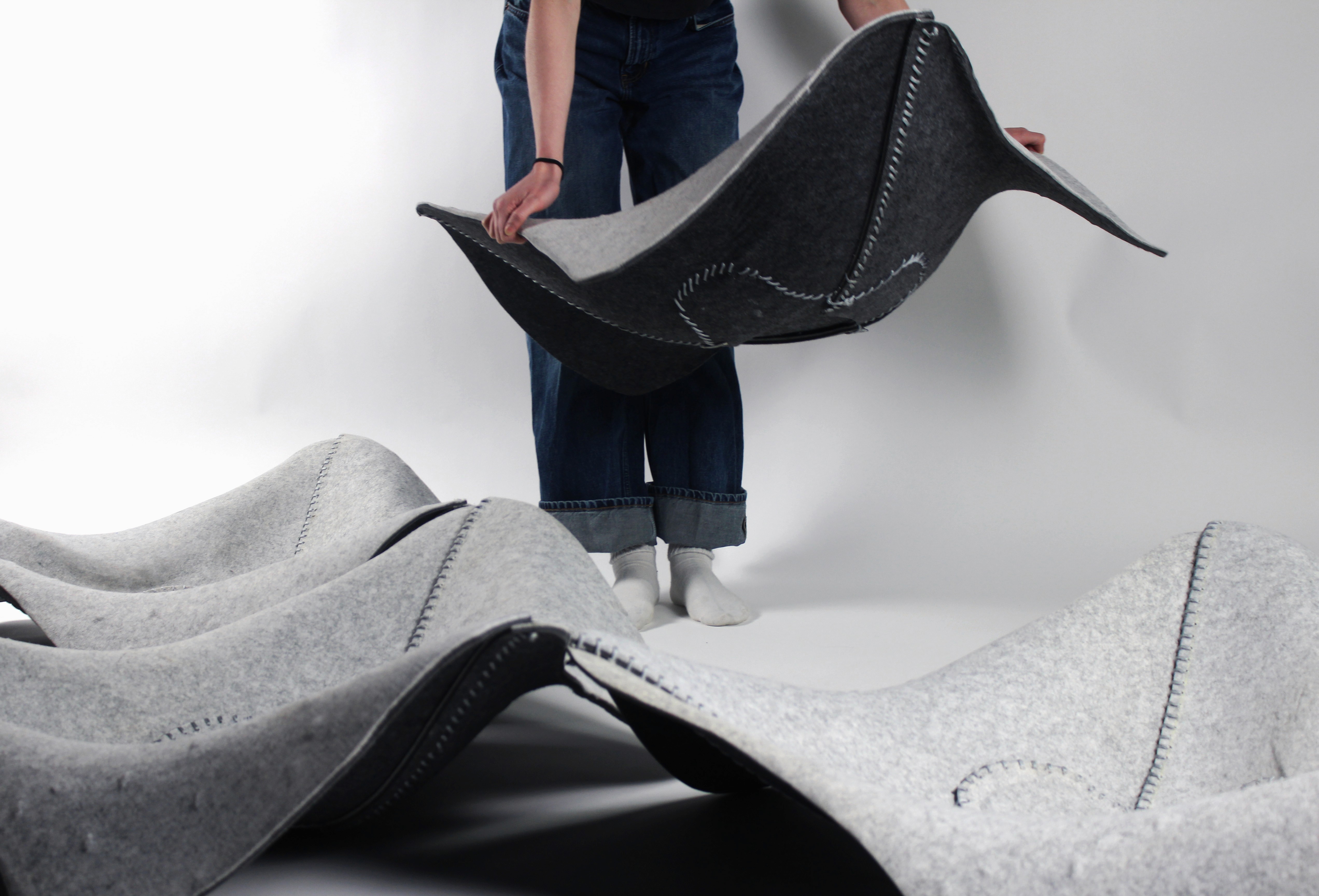
ADAPTING TO NEEDS
ADAPTING TO NEEDS
ADAPTING TO NEEDS
Seats can easily be reconfigured or stacked and put away to allow for the function of the space to change based on its needs.
If a large lounge space is not necessary, it doesn’t need to be there. Manta can retreat to the background, or engage users at a moments notice.
Seats can easily be reconfigured or stacked and put away to allow for the function of the space to change based on its needs.
If a large lounge space is not necessary, it doesn’t need to be there. Manta can retreat to the background, or engage users at a moments notice.
Seats can easily be reconfigured or stacked and put away to allow for the function of the space to change based on its needs.
If a large lounge space is not necessary, it doesn’t need to be there. Manta can retreat to the background, or engage users at a moments notice.
IDEATION
IDEATION
IDEATION
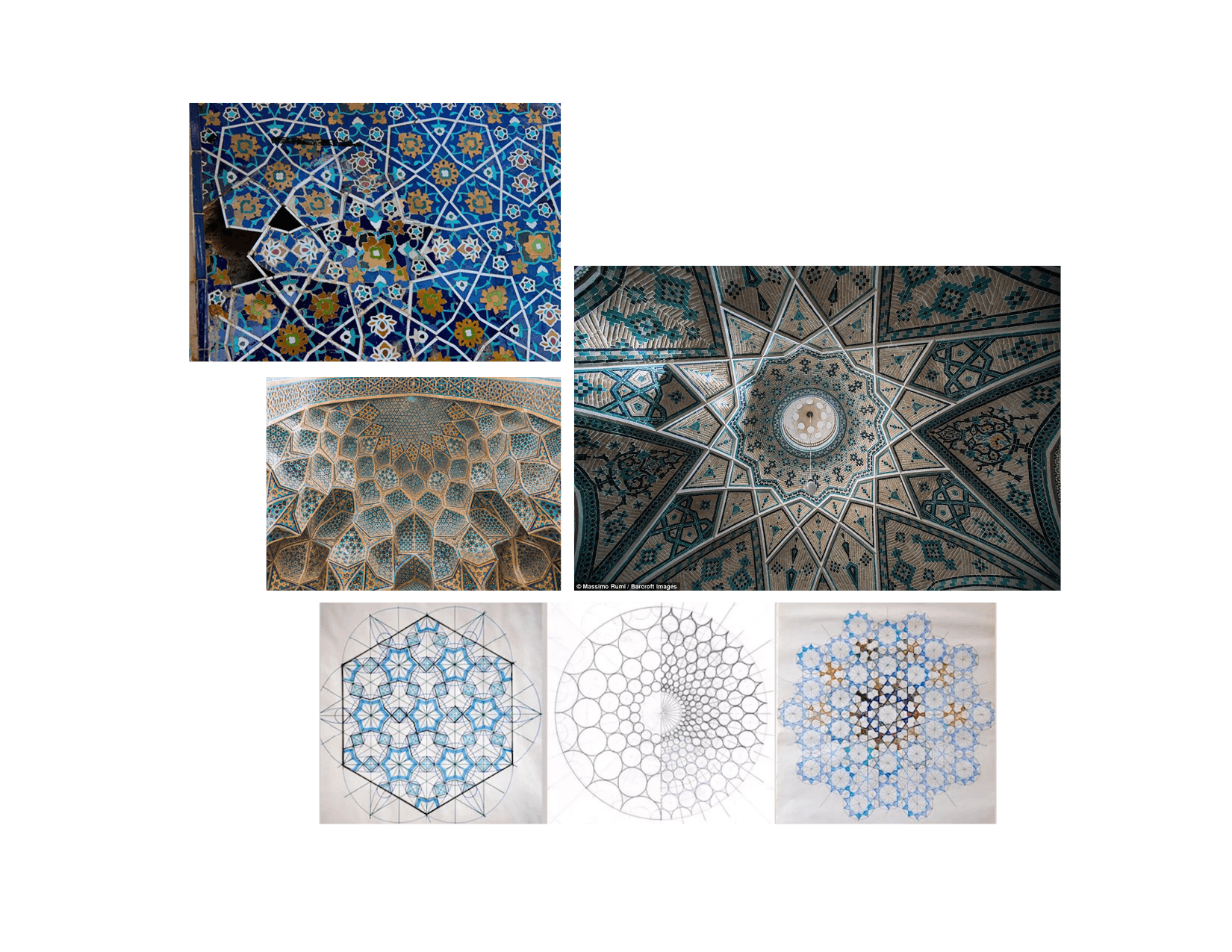
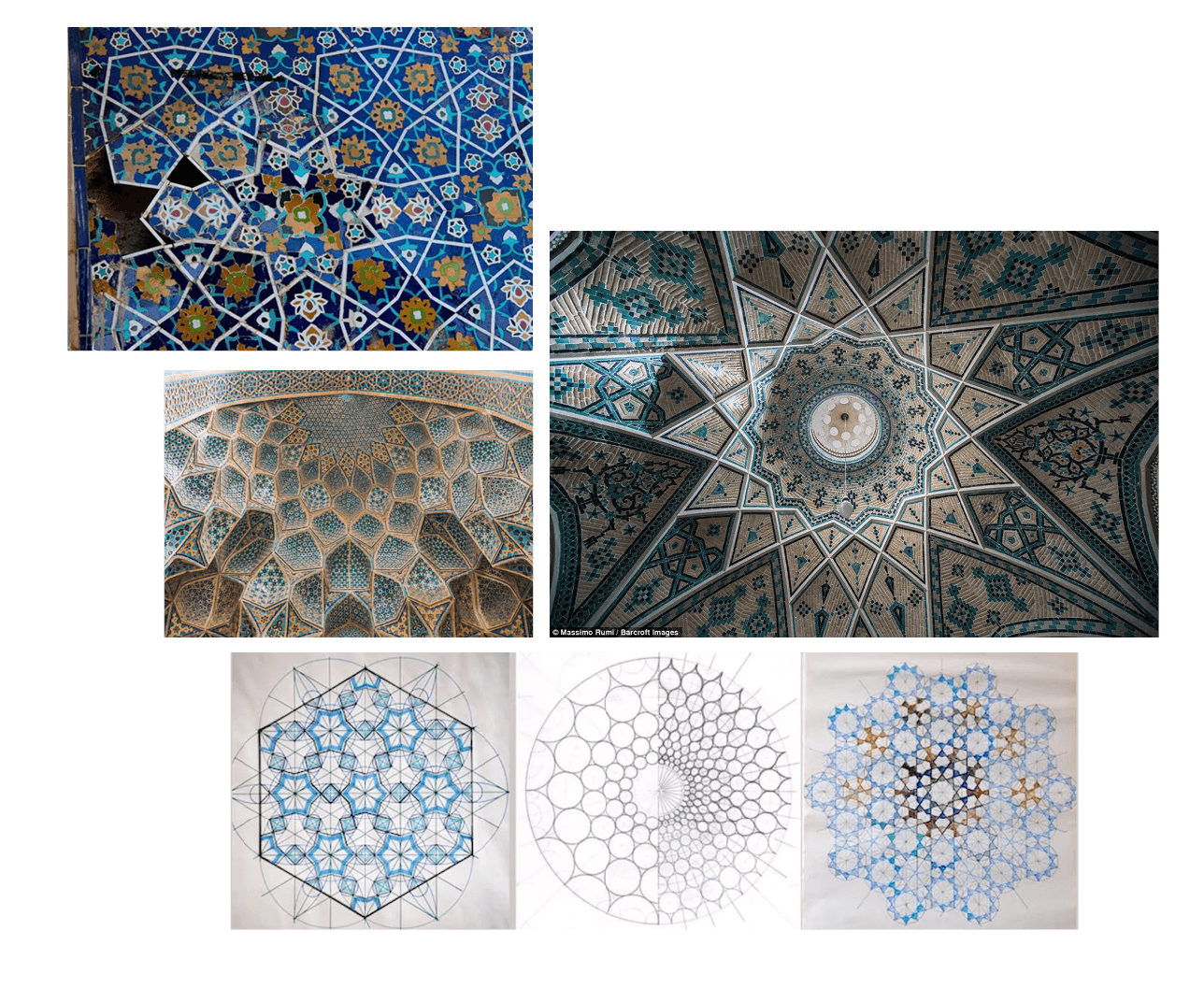
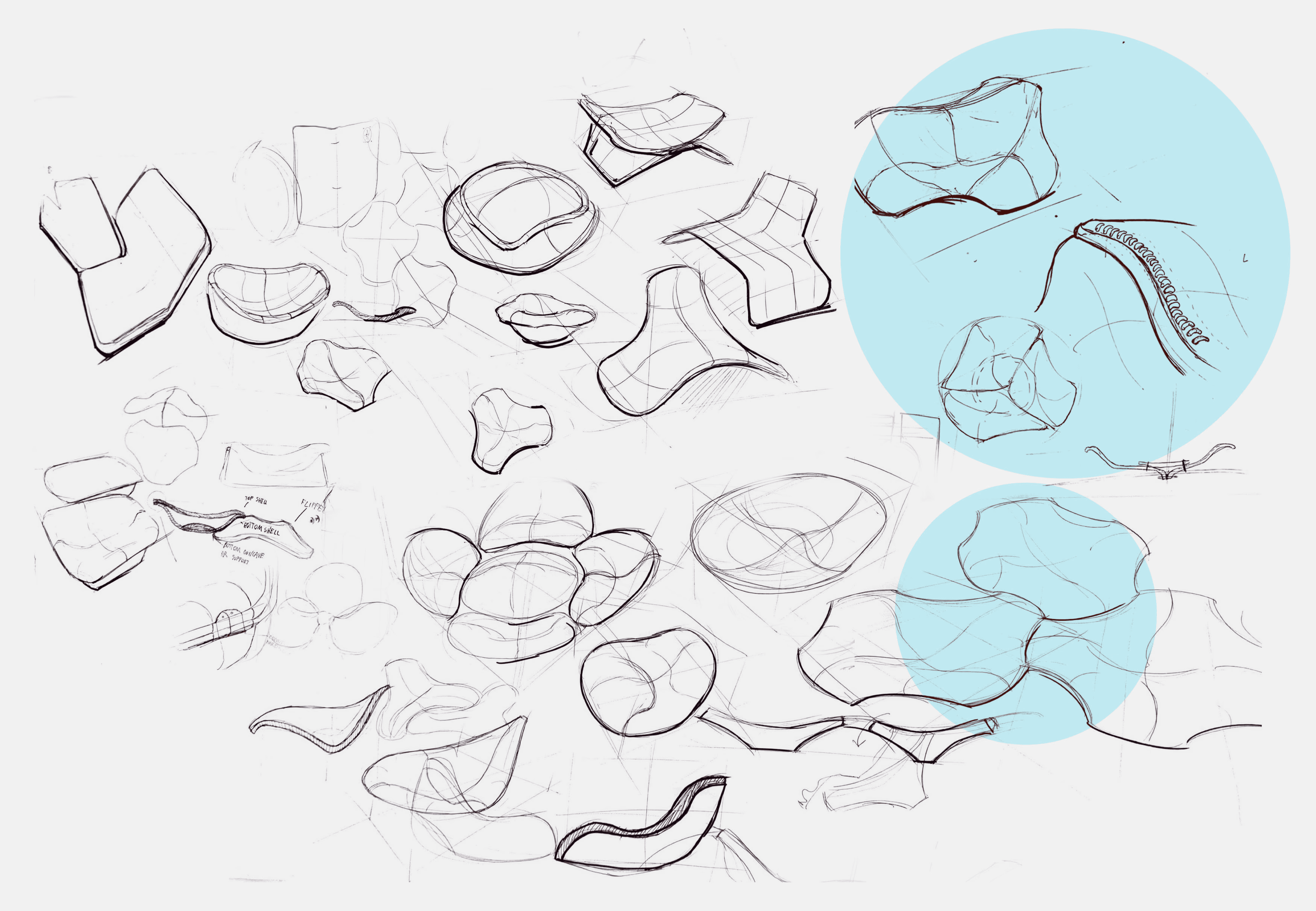
Inspired by Persian tilework, I explored how a single surface can be the sole module in a tesselating landscape of seating.
I studied the geometry and structures of different tiles, to create my own geometrically constrained system for seating.
Inspired by Persian tilework, I explored how a single surface can be the sole module in a tesselating landscape of seating.
I studied the geometry and structures of different tiles, to create my own geometrically constrained system for seating.
Inspired by Persian tilework, I explored how a single surface can be the sole module in a tesselating landscape of seating.
I studied the geometry and structures of different tiles, to create my own geometrically constrained system for seating.
Prototyping
Prototyping
Prototyping
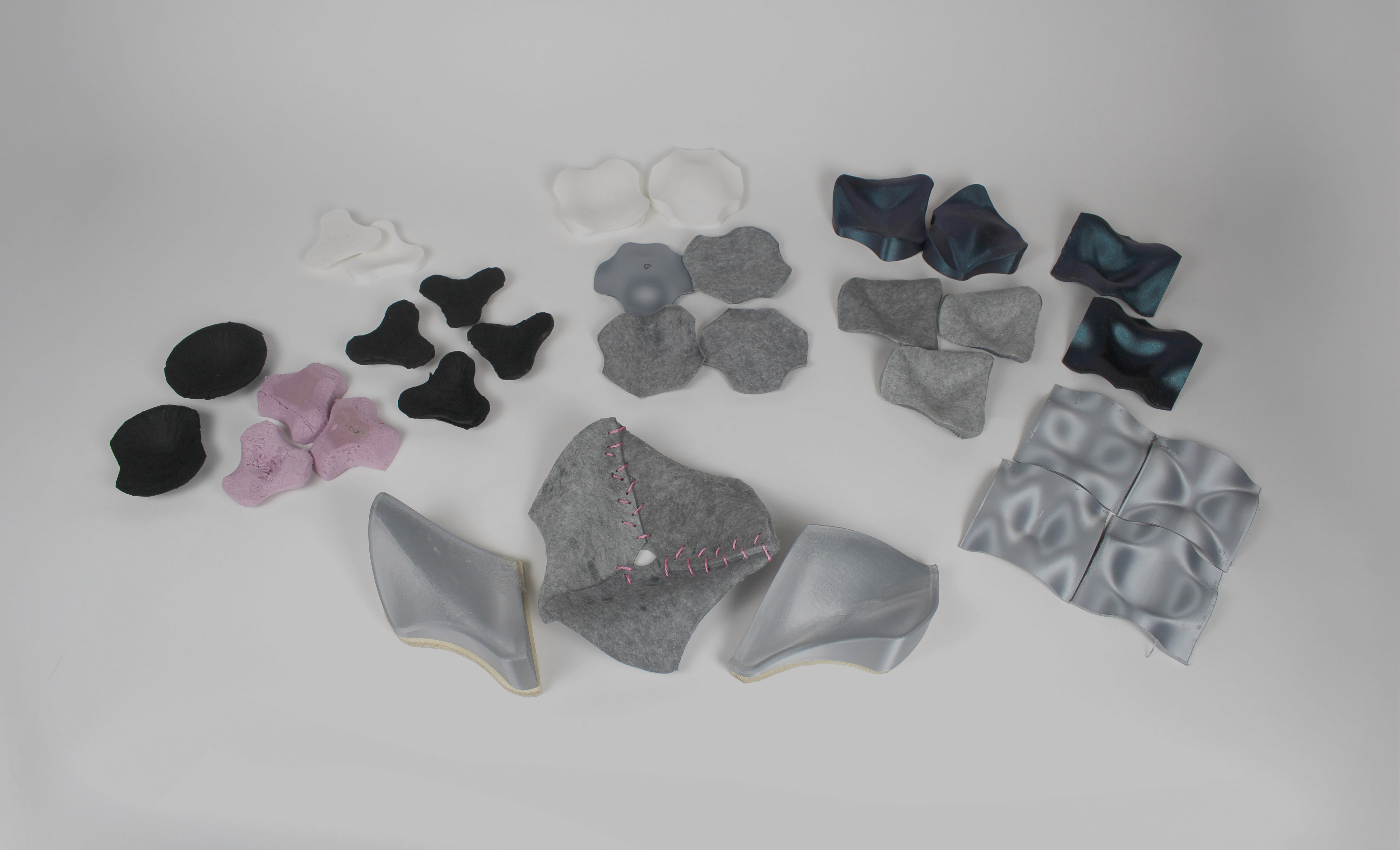
The prototyping stage was not only a time to determine what Manta would look like, but also when I began to understand the molding properties and process of PET felt.
I used 3D printed molds of the surfaces that I was creating, and then cut the shapes out on a fine tooth bandsaw before sanding the edges smooth.
The prototyping stage was not only a time to determine what Manta would look like, but also when I began to understand the molding properties and process of PET felt.
I used 3D printed molds of the surfaces that I was creating, and then cut the shapes out on a fine tooth bandsaw before sanding the edges smooth.
The prototyping stage was not only a time to determine what Manta would look like, but also when I began to understand the molding properties and process of PET felt.
I used 3D printed molds of the surfaces that I was creating, and then cut the shapes out on a fine tooth bandsaw before sanding the edges smooth.
MOLD MAKING
MOLD MAKING
MOLD MAKING
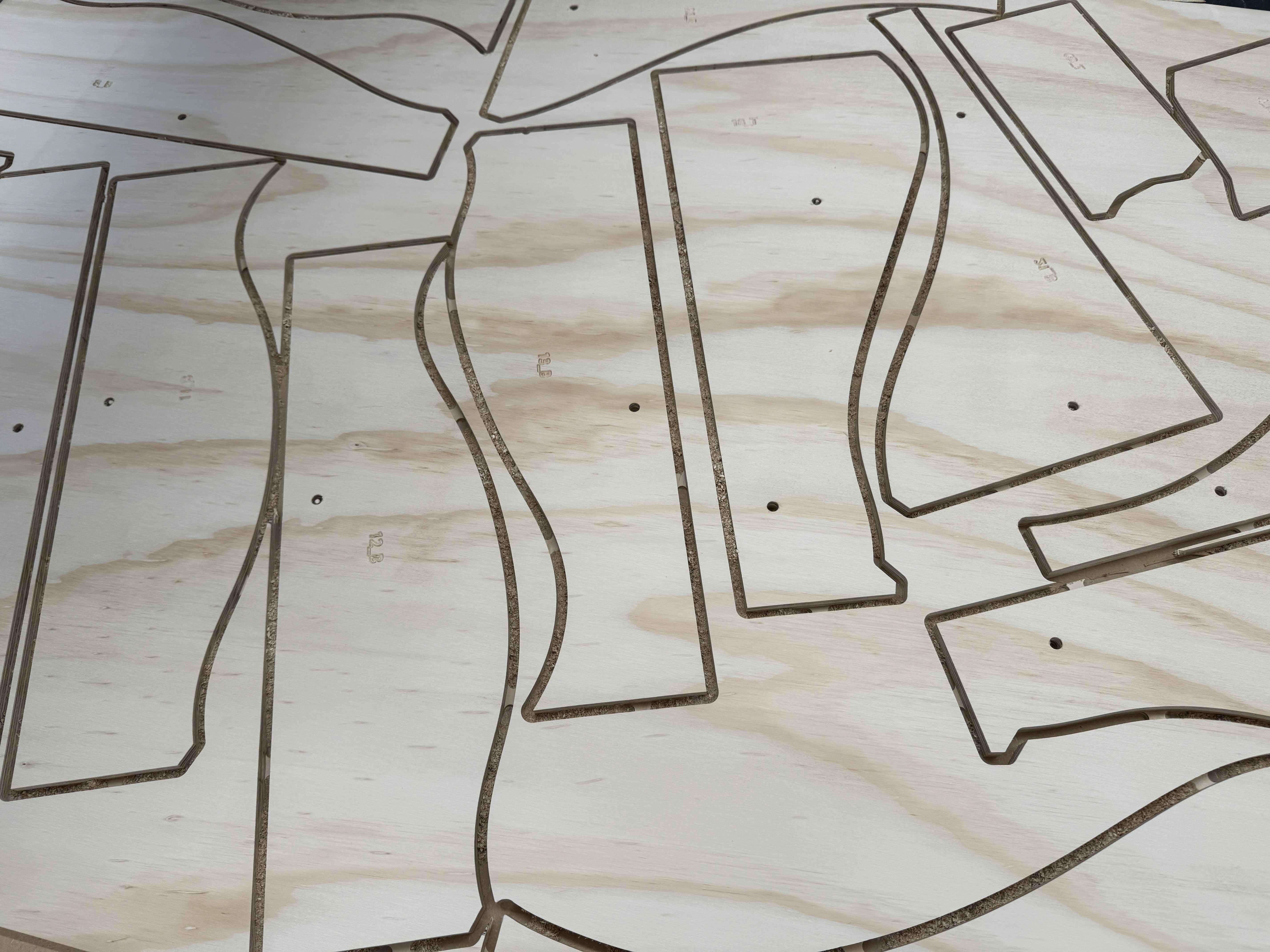
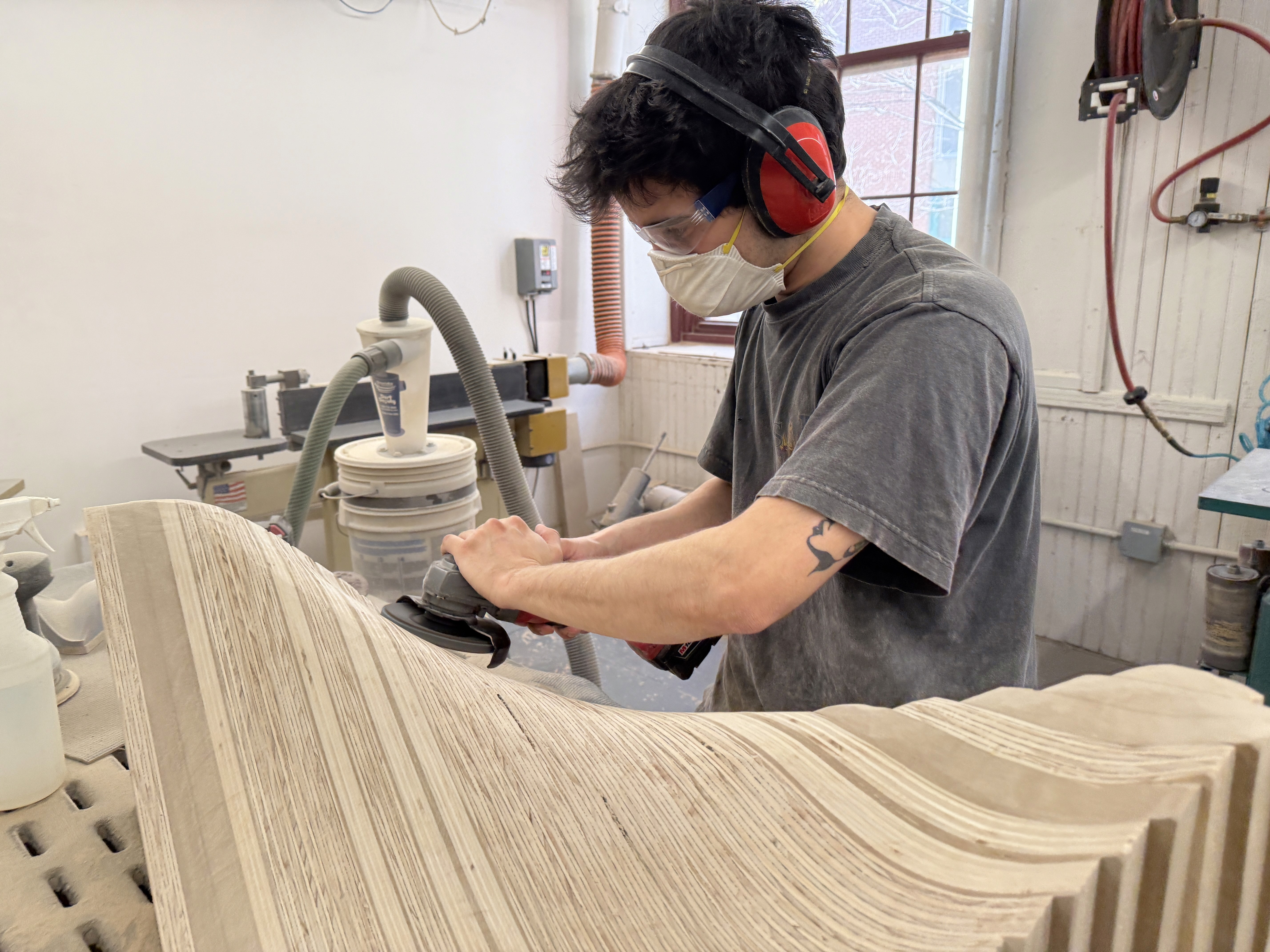
I CNC routed the mold into layers, to then glue them together and grind them down into the desired surface. I added a layer of EVA foam on the surface of each mold to get even surface pressure.
I CNC routed the mold into layers, to then glue them together and grind them down into the desired surface. I added a layer of EVA foam on the surface of each mold to get even surface pressure.
I CNC routed the mold into layers, to then glue them together and grind them down into the desired surface. I added a layer of EVA foam on the surface of each mold to get even surface pressure.

FABRICATION
FABRICATION
FABRICATION
3’ x 3’ sheets of felt were heated in an oven, and quickly compressed inside the two part mold. Panels were then cut and stitched together using paracord.
3’ x 3’ sheets of felt were heated in an oven, and quickly compressed inside the two part mold. Panels were then cut and stitched together using paracord.
3’ x 3’ sheets of felt were heated in an oven, and quickly compressed inside the two part mold. Panels were then cut and stitched together using paracord.