iris harness
iris harness
iris harness
an advanced harness for spaceflight exercise
an advanced harness for spaceflight exercise
an advanced harness for spaceflight exercise
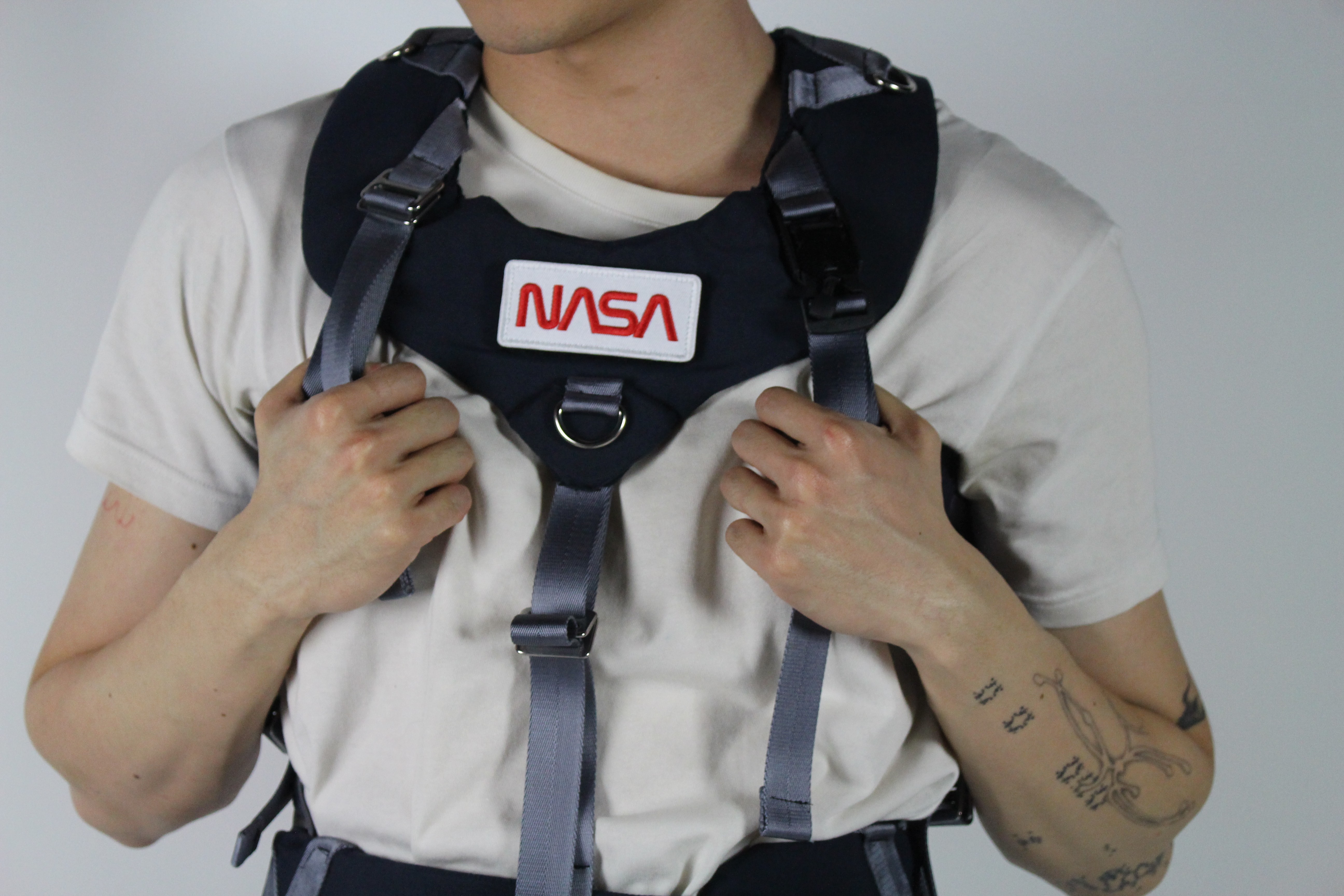
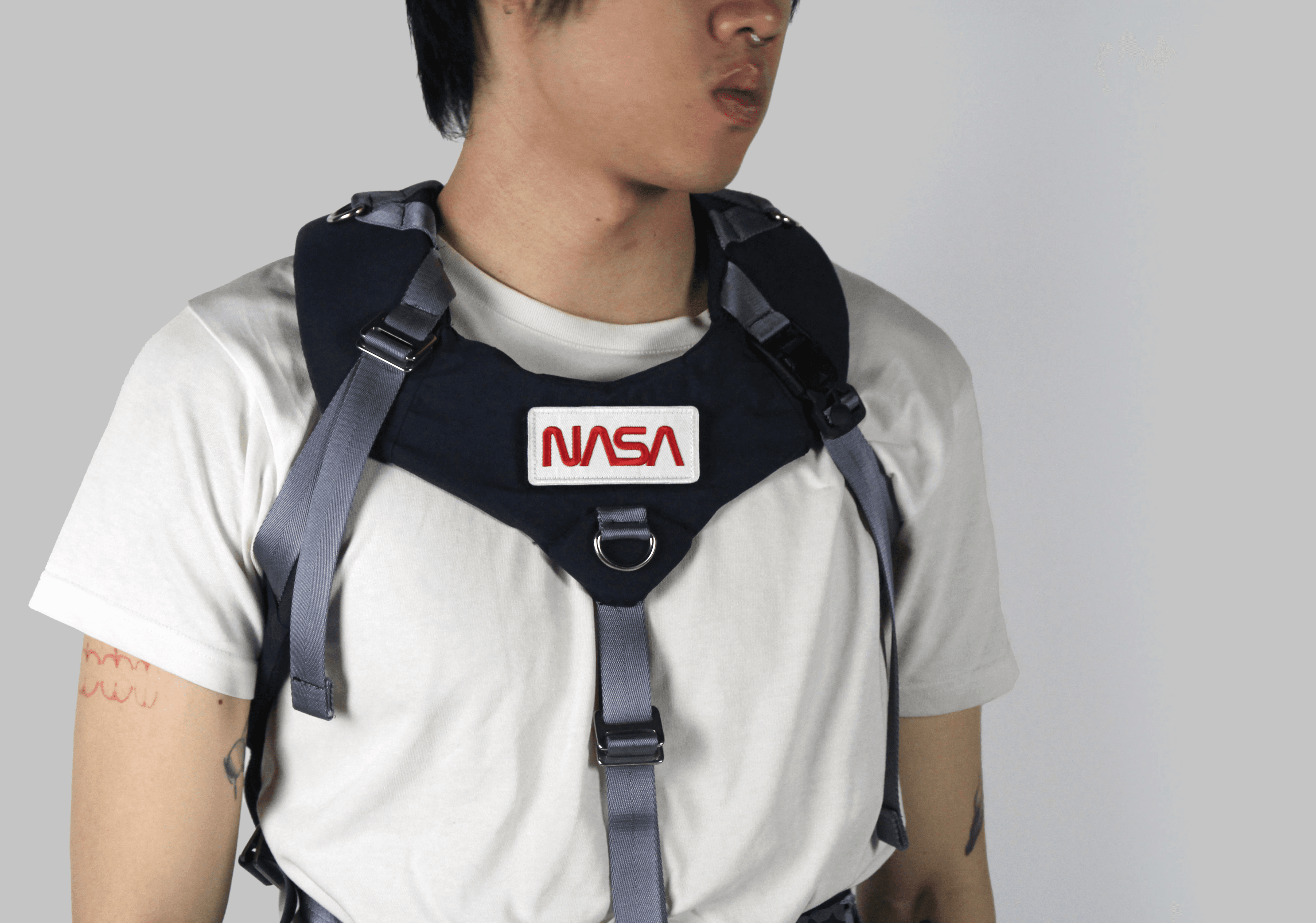
The IRIS Harness is an adjustable, sensor-integrated harness designed for astronauts to practice multiple exercise modalities in microgravity.
The prompt was given by NASA and the Houston Technology Collaboration Center for the Wearable Technology Challenge at Johnson Space Center.
This project was designed and fabricated in collaboration with classmates Grace Foresta and Evan Wu.
The IRIS Harness is an adjustable, sensor-integrated harness designed for astronauts to practice multiple exercise modalities in microgravity.
The prompt was given by NASA and the Houston Technology Collaboration Center for the Wearable Technology Challenge at Johnson Space Center.
This project was designed and fabricated in collaboration with classmates Grace Foresta and Evan Wu.
The IRIS Harness is an adjustable, sensor-integrated harness designed for astronauts to practice multiple exercise modalities in microgravity.
The prompt was given by NASA and the Houston Technology Collaboration Center for the Wearable Technology Challenge at Johnson Space Center.
This project was designed and fabricated in collaboration with classmates Grace Foresta and Evan Wu.
astronauts need to exercise
astronauts need to exercise
astronauts need to exercise
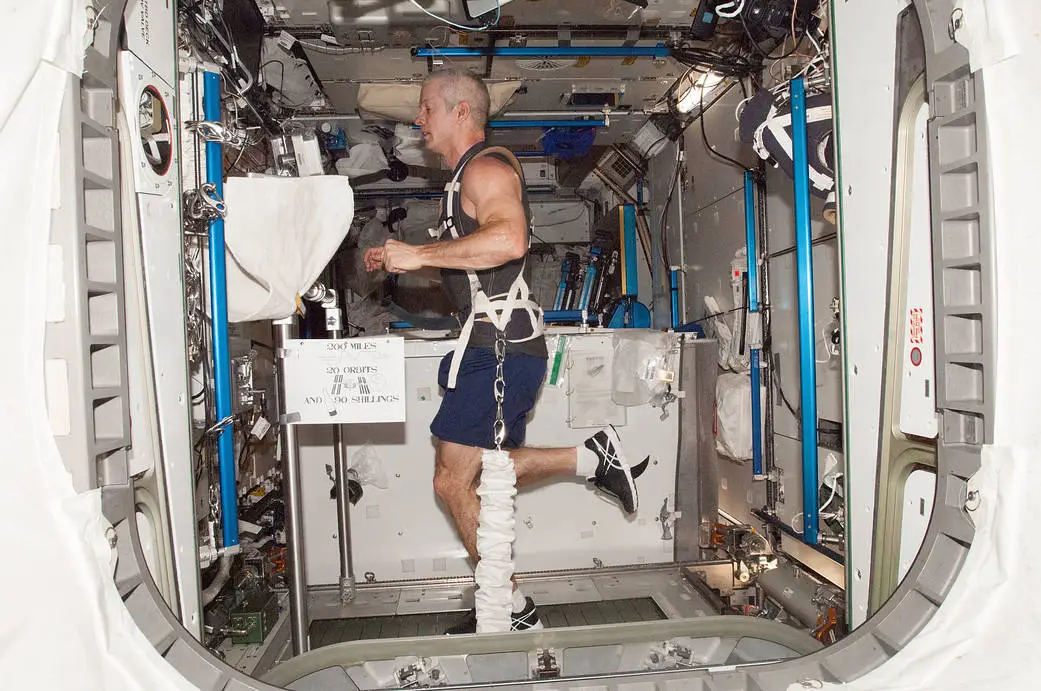
Astronauts in a microgravity environment naturally experience musculoskeletal degeneration due to the lack of gravity. Because of this they must exercise daily using specialized machines with harnesses to simulate gravitational load.
Astronauts currently use the Glenn Harness, but it’s only suitable for running on the treadmill machine, and astronauts report issues of significant discomfort.
Astronauts in a microgravity environment naturally experience musculoskeletal degeneration due to the lack of gravity. Because of this they must exercise daily using specialized machines with harnesses to simulate gravitational load.
Astronauts currently use the Glenn Harness, but it’s only suitable for running on the treadmill machine, and astronauts report issues of significant discomfort.
Astronauts in a microgravity environment naturally experience musculoskeletal degeneration due to the lack of gravity. Because of this they must exercise daily using specialized machines with harnesses to simulate gravitational load.
Astronauts currently use the Glenn Harness, but it’s only suitable for running on the treadmill machine, and astronauts report issues of significant discomfort.
adjustable for all bodies
adjustable for all bodies
adjustable for all bodies
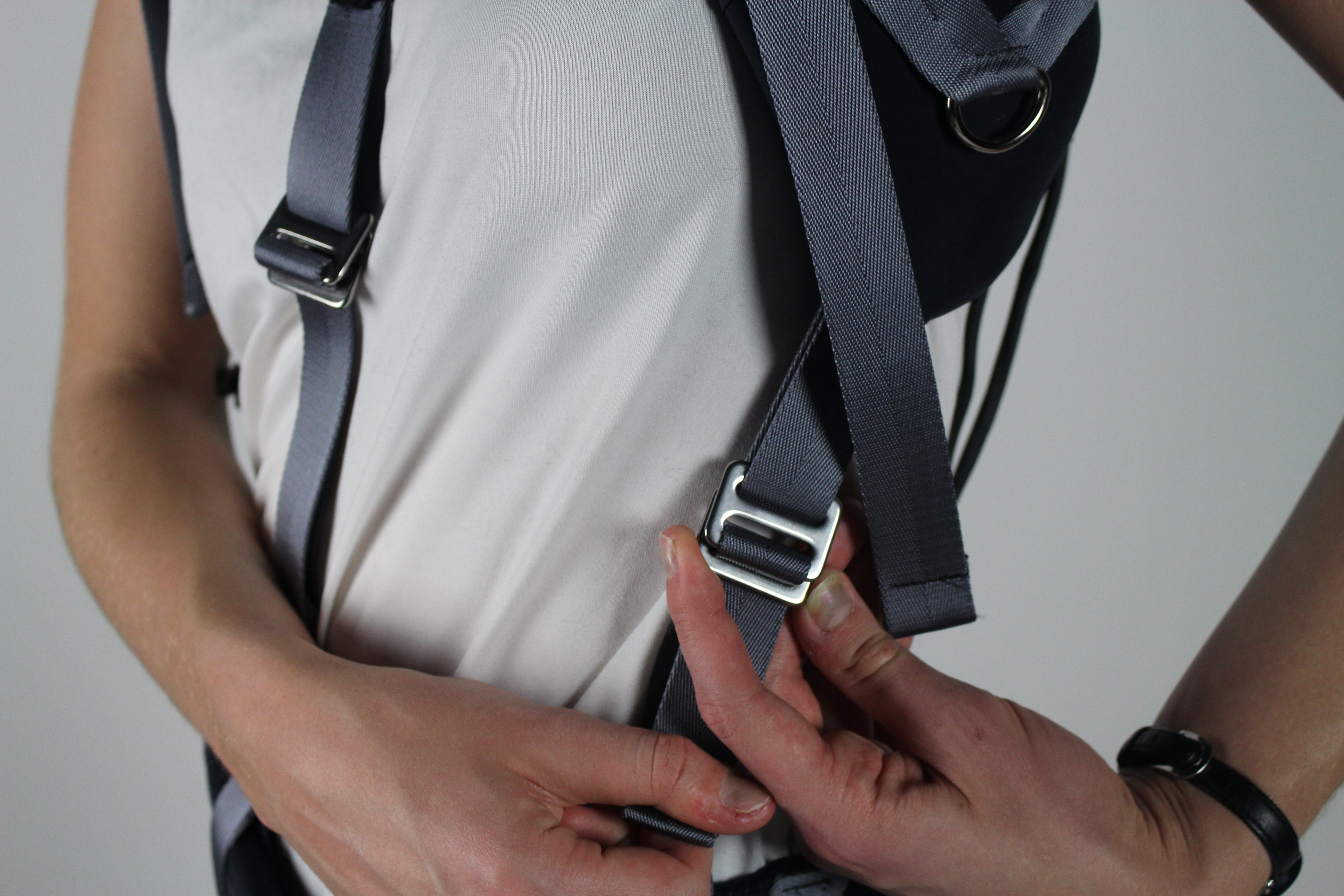
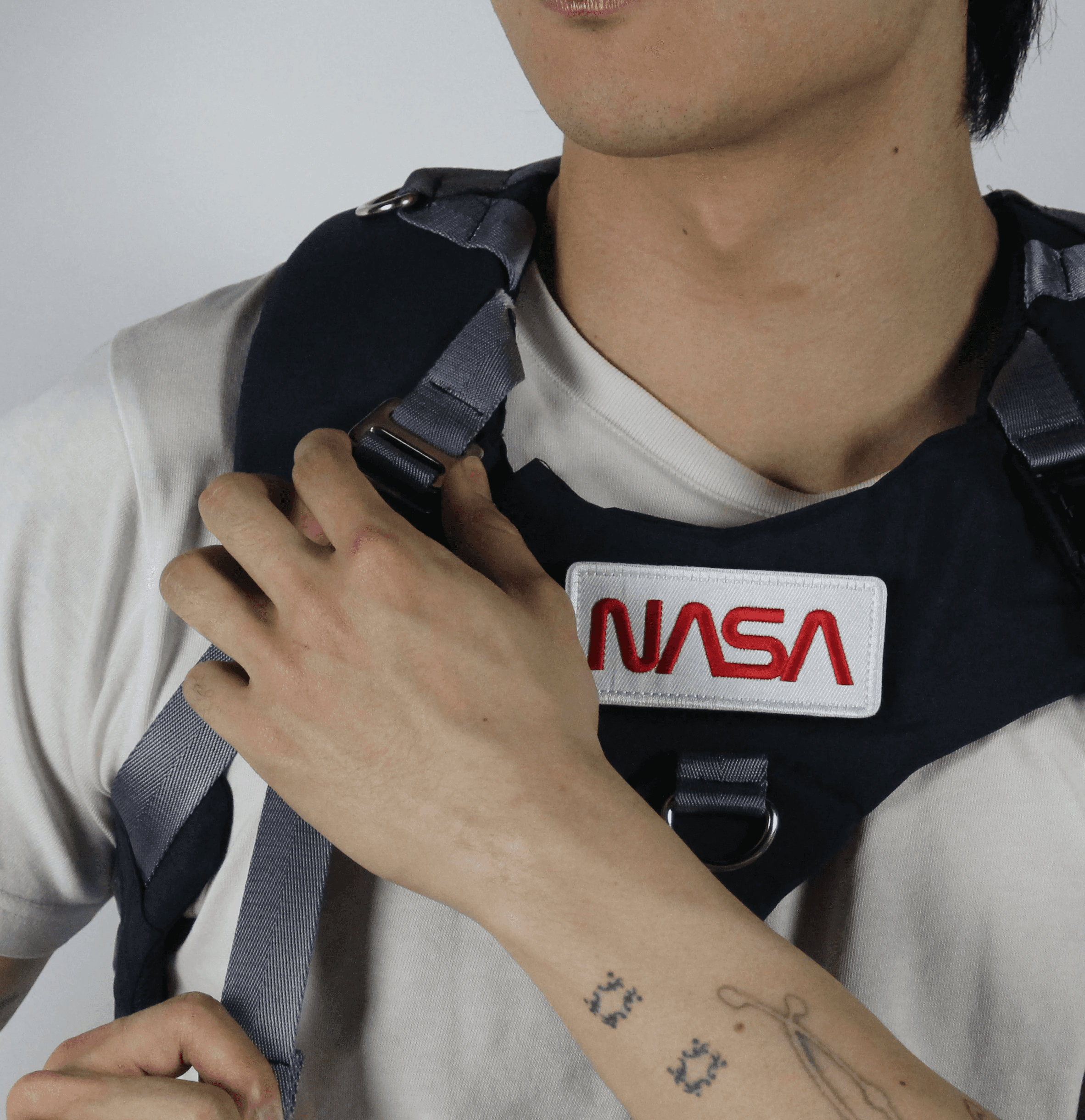
The harness has 6 points of adjustment to comfortably fit all wearers from the 1st to 95th percentiles.
The harness has 6 points of adjustment to comfortably fit all wearers from the 1st to 95th percentiles.
The harness has 6 points of adjustment to comfortably fit all wearers from the 1st to 95th percentiles.
Don & Doff in 1-2-3
Don & Doff in 1-2-3
Don & Doff in 1-2-3
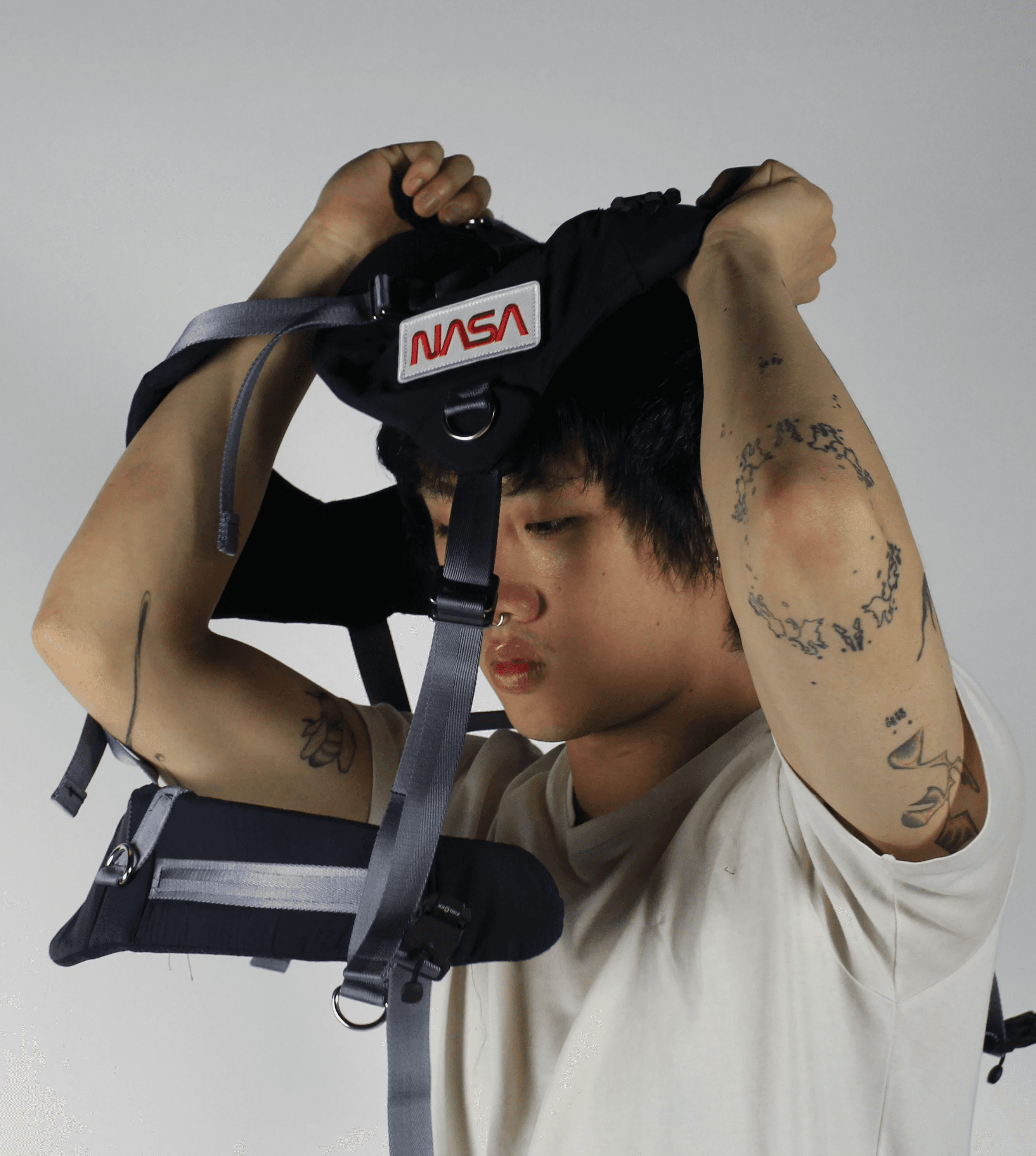
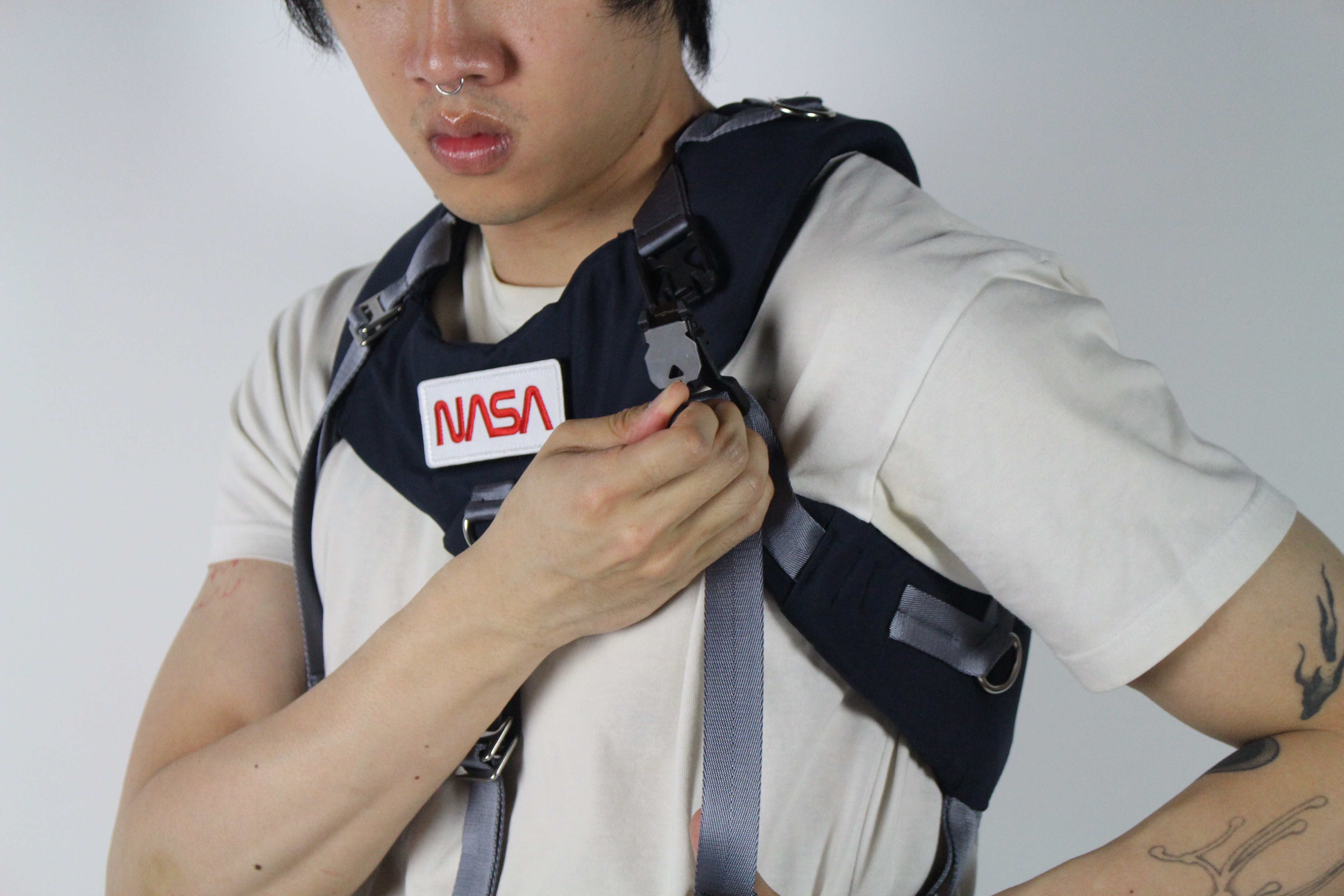
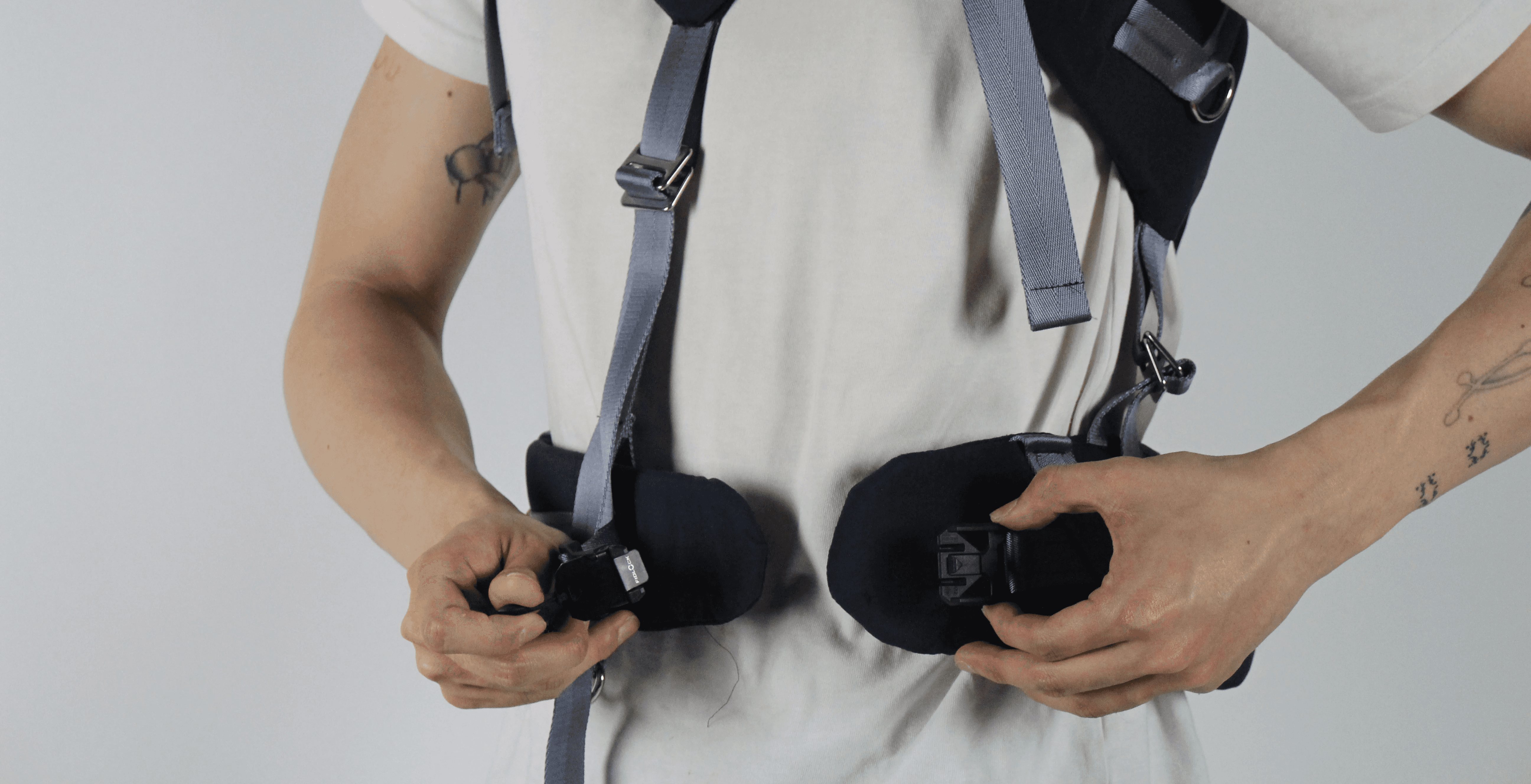
Donning and Doffing the harness can be done in three simple steps:
1) Pass harness over head
2) Secure chest buckle
3) Secure waist buckle
Donning and Doffing the harness can be done in three simple steps:
1) Pass harness over head
2) Secure chest buckle
3) Secure waist buckle
Donning and Doffing the harness can be done in three simple steps:
1) Pass harness over head
2) Secure chest buckle
3) Secure waist buckle
load sensing
load sensing
load sensing
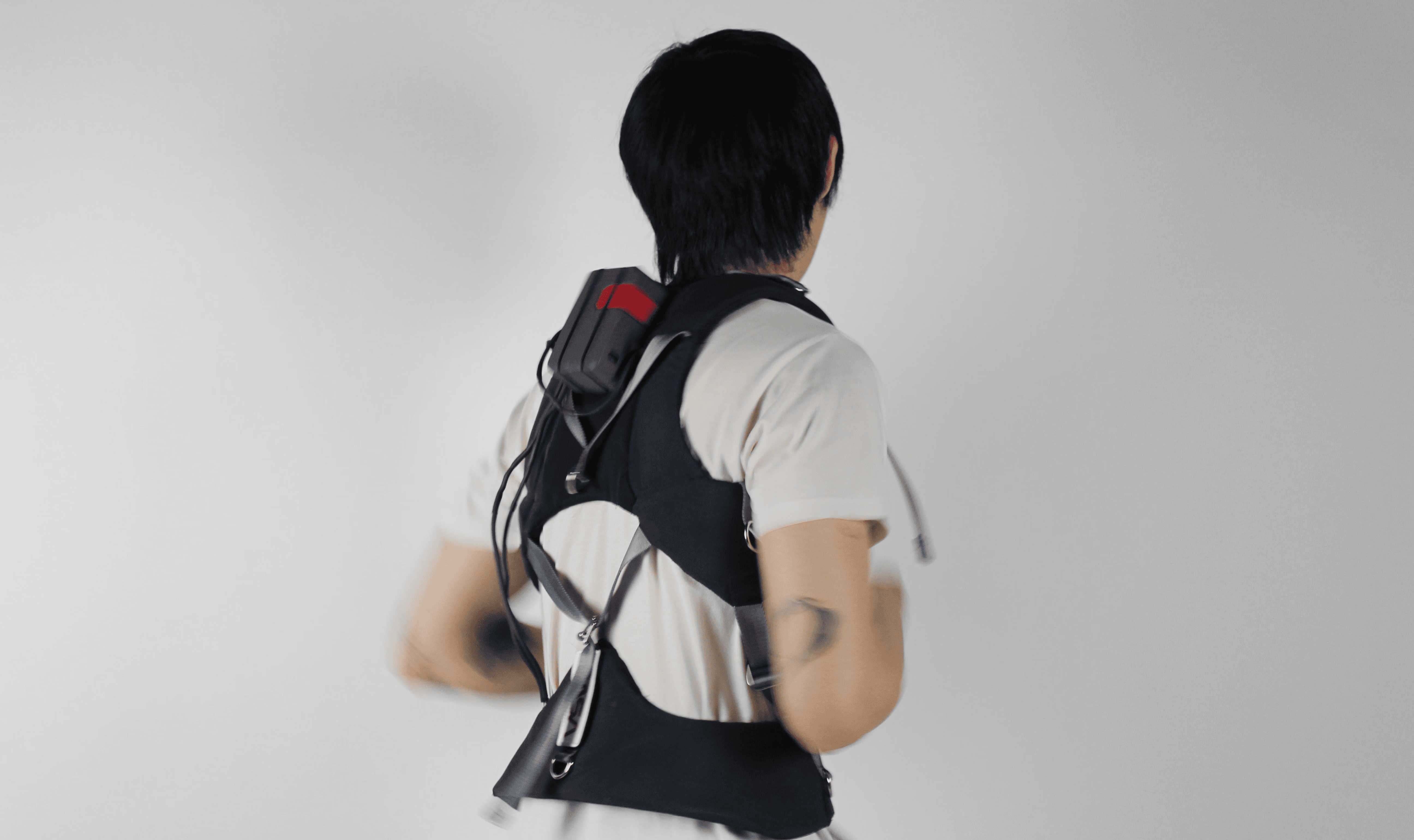
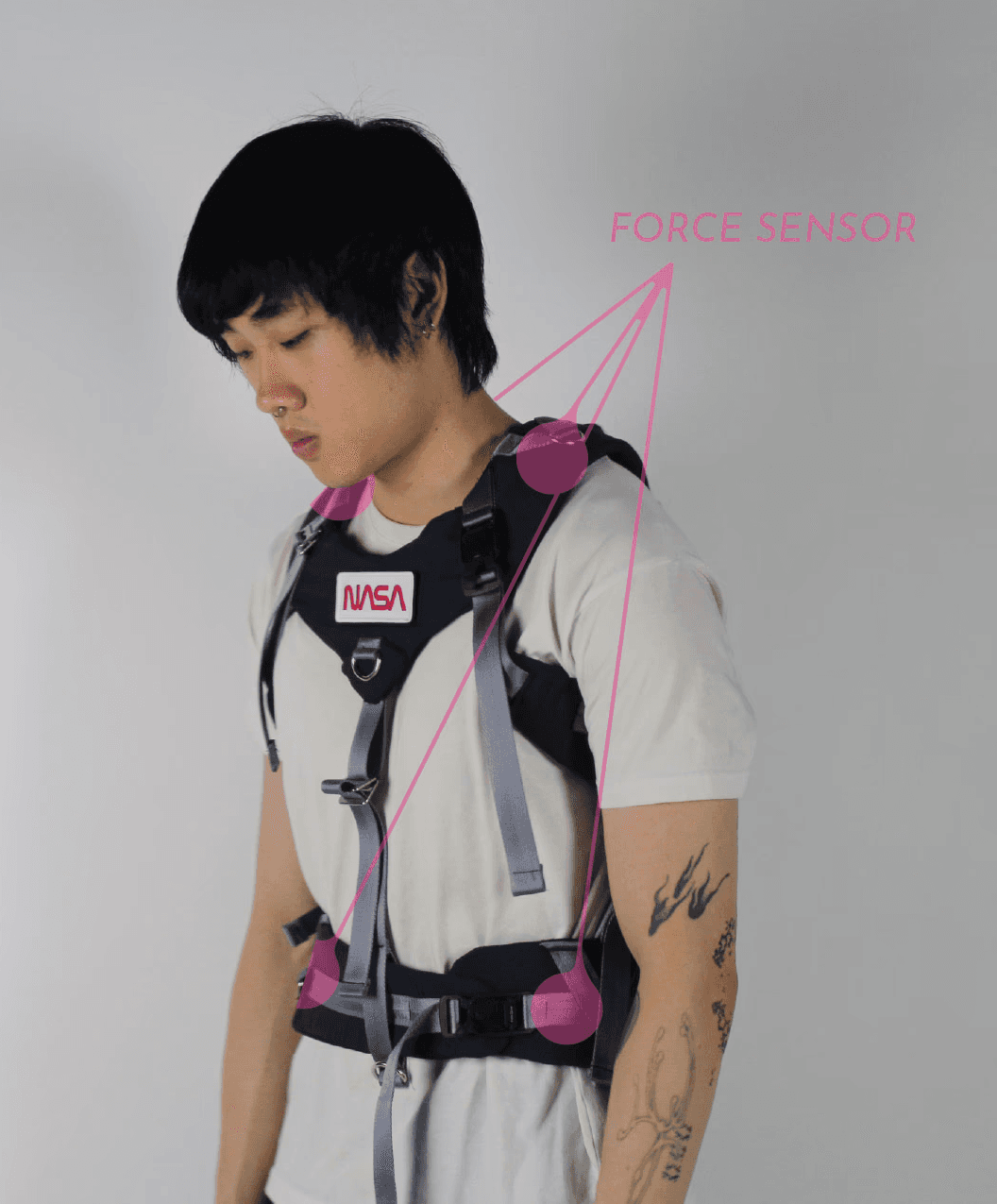
Integrated pressure sensors at the waist and shoulders measure how load is being applied and distributed between the hips and shoulders.
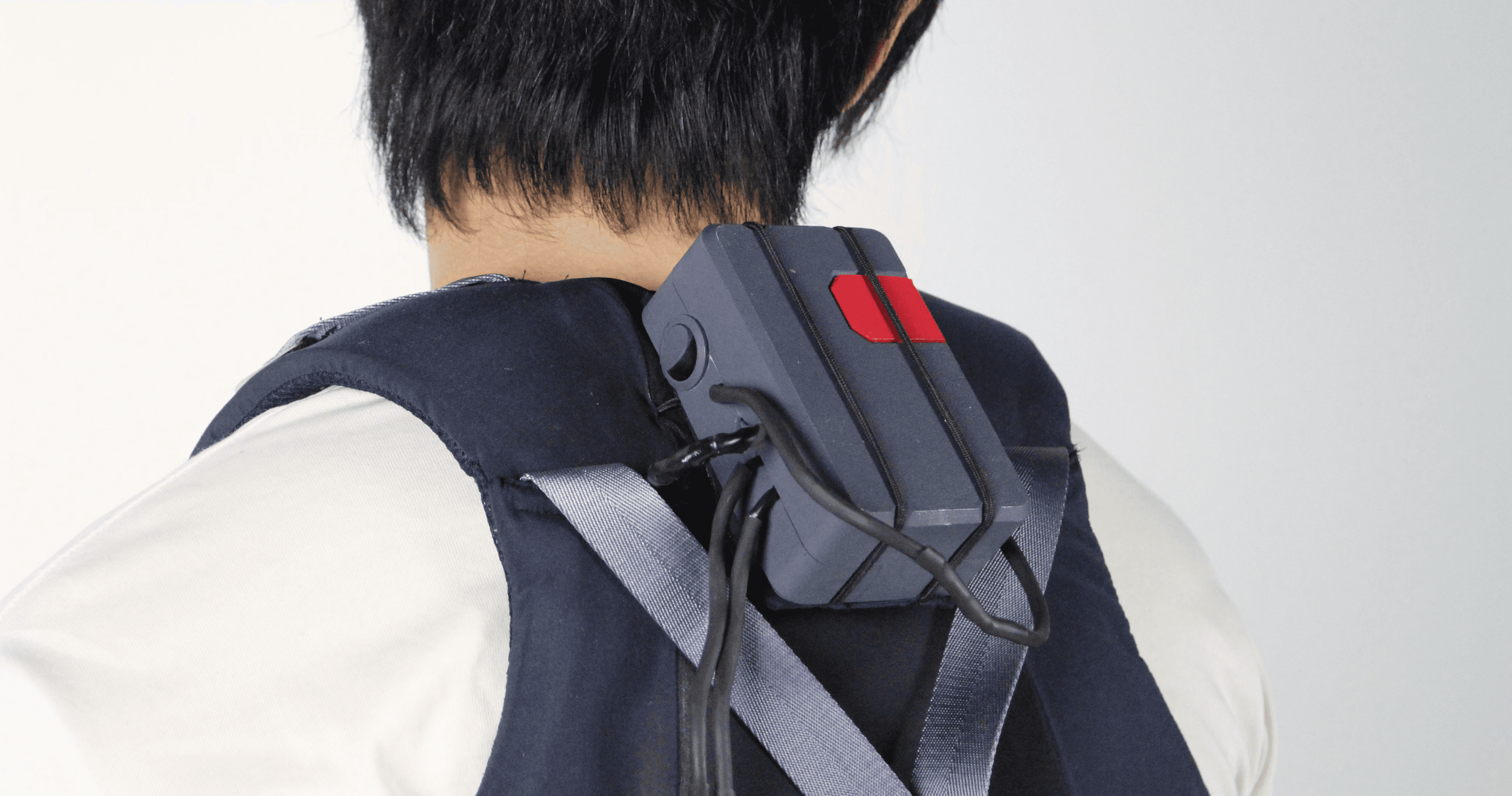
These values are collected and calculated on a microcontroller on the harness back.
By comparing the pressure applied at these two regions, astronauts can adjust their harness to fine tune the load distribution to maximize comfort and to adjust to different exercises.
Integrated pressure sensors at the waist and shoulders measure how load is being applied and distributed between the hips and shoulders.
These values are collected and calculated on a microcontroller on the harness back.
By comparing the pressure applied at these two regions, astronauts can adjust their harness to fine tune the load distribution to maximize comfort and to adjust to different exercises.
Integrated pressure sensors at the waist and shoulders measure how load is being applied and distributed between the hips and shoulders.
These values are collected and calculated on a microcontroller on the harness back.
By comparing the pressure applied at these two regions, astronauts can adjust their harness to fine tune the load distribution to maximize comfort and to adjust to different exercises.
Prototyping
Prototyping
Prototyping
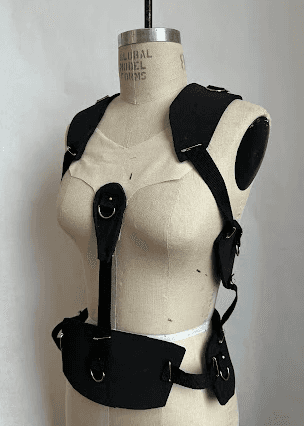
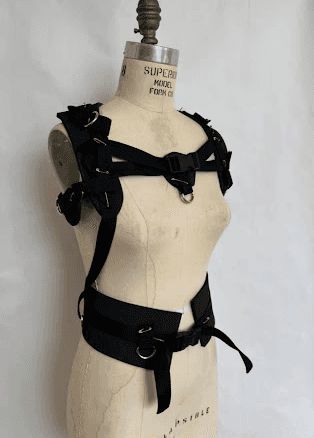
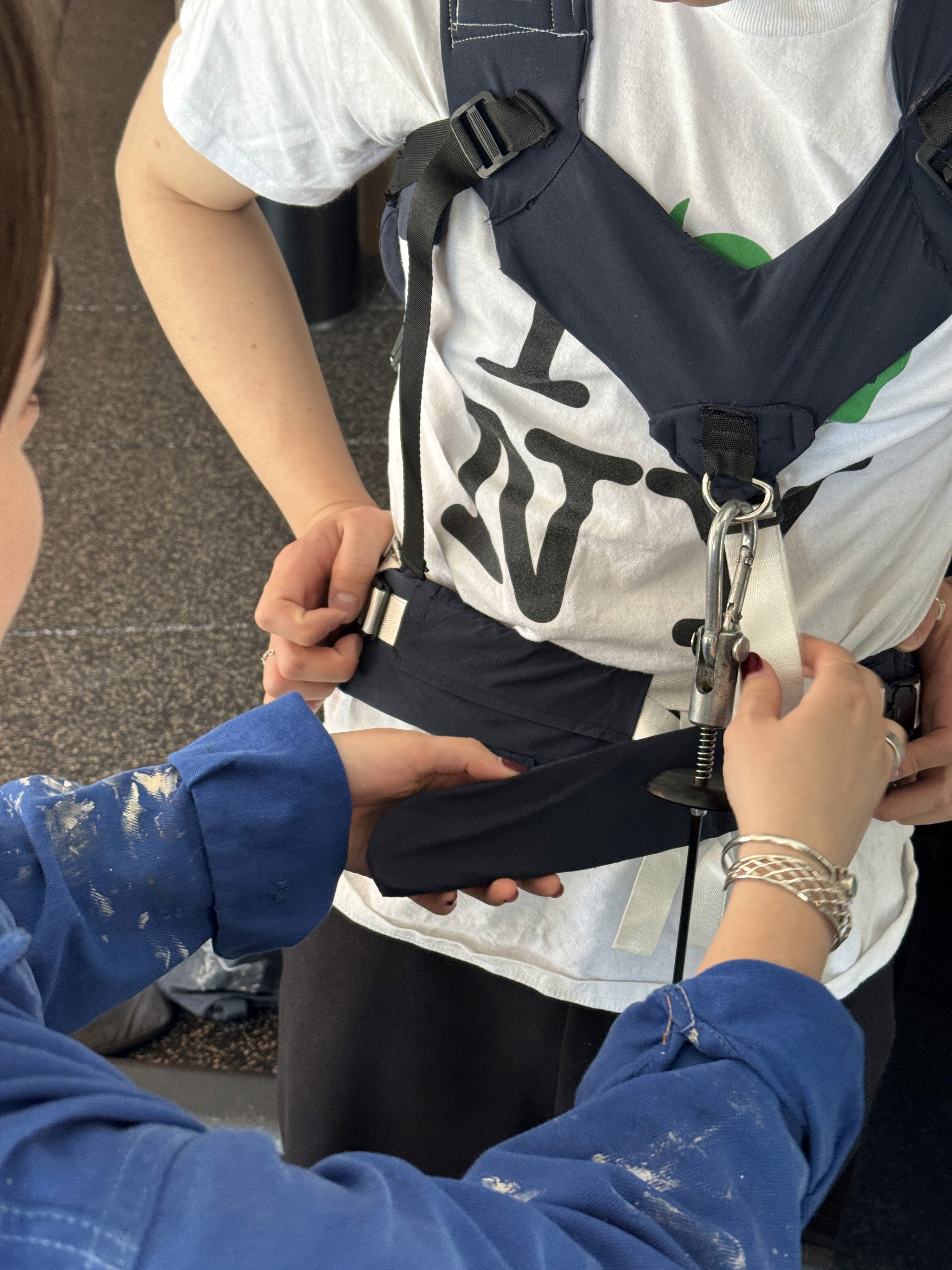
We created several rounds of iterative prototypes to test comfort, mobility, and weight distribution of the harness before producing our final design.
We created several rounds of iterative prototypes to test comfort, mobility, and weight distribution of the harness before producing our final design.
We created several rounds of iterative prototypes to test comfort, mobility, and weight distribution of the harness before producing our final design.